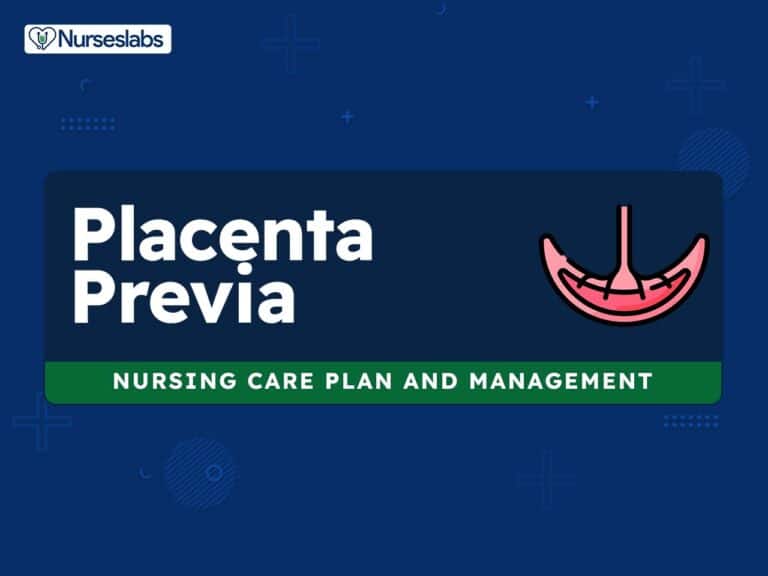
Placenta previa is a condition of pregnancy in which the placenta is implanted abnormally in the lower part of the uterus. It is the most common cause of painless bleeding in the third trimester of pregnancy. It occurs in four degrees: low-lying placenta, which is implantation in the lower rather than in the upper portion of the uterus; marginal implantation, in which the placenta edge approaches that of the cervical os; partial placenta previa, which is implantation that occludes a portion of the cervical os; and total placenta previa, in which the implantation totally obstructs the cervical os.
Increased parity, advanced maternal age, past cesarean births, past uterine curettage, multiple gestations, and perhaps a male fetus are all associated with placenta previa.
"Painless vaginal bleeding, usually bright red, is the main characteristic of placenta previa."
Painless vaginal bleeding, usually bright red, is the main characteristic of placenta previa. The bleeding in placenta previa doesn’t usually begin, however, until the lower uterine segment starts to differentiate from the upper segment late in pregnancy (week 30) and the cervix begins to dilate. At this point, because the placenta is unable to stretch to accommodate the different shapes of the lower uterine segment or the cervix, a small portion loosens, and damaged blood vessels begin to bleed.
Table of Contents
- Nursing Care Plans and Management
- Recommended Resources
- See also
- References and Sources
Nursing Care Plans and Management
The nursing care plan for patients with placenta previa includes close monitoring of maternal vital signs, uterine activity, and vaginal bleeding. Strict bed rest is often recommended to reduce the risk of bleeding episodes. The nurse should also provide emotional support and education to the patient and family regarding the condition, including signs of complications and when to seek medical assistance.
Nursing Problem Priorities
The following are the nursing priorities for patients with placenta previa:
- Monitor maternal vital signs and uterine activity
- Assess and manage vaginal bleeding
- Provide emotional support and education to the patient and family
- Implement strict bed rest to reduce the risk of bleeding
- Notify the healthcare provider promptly in case of bleeding
- Assist with interventions to control bleeding and maintain maternal and fetal stability
Nursing Assessment
Assess for the following subjective and objective data:
- Painless vaginal bleeding, typically occurring in the third trimester
- Bright red blood in the vaginal discharge
- Uterine tenderness or contractions
- Soft, relaxed uterus upon palpation
- Abnormal fetal position, such as breech presentation
- Fetal distress or decreased fetal movement
- Maternal symptoms of anemia, such as fatigue or weakness
- Signs of shock in severe cases, including lightheadedness, dizziness, and rapid heartbeat
Nursing Diagnosis
Following a thorough assessment, a nursing diagnosis is formulated to specifically address the challenges associated with placenta previa based on the nurse’s clinical judgment and understanding of the patient’s unique health condition. While nursing diagnoses serve as a framework for organizing care, their usefulness may vary in different clinical situations. In real-life clinical settings, it is important to note that the use of specific nursing diagnostic labels may not be as prominent or commonly utilized as other components of the care plan. It is ultimately the nurse’s clinical expertise and judgment that shape the care plan to meet the unique needs of each patient, prioritizing their health concerns and priorities.
Nursing Goals
Goals and expected outcomes may include:
- The client will maintain fluid volume at a functional level, possibly evidenced by adequate urinary output and stable vital signs.
- The client will display homeostasis as evidenced by the absence of bleeding.
- The client will participate in and demonstrate activities that reduce the workload of the heart.
- The client will manifest hemodynamic stability.
- The client will demonstrate behaviors to improve circulation.
- The client will demonstrate increased perfusion as individually appropriate.
- The client will be free from infection and its complications.
- The client will identify interventions to prevent or reduce the risk of infection.
- The client will develop techniques and demonstrate lifestyle changes to prevent infection.
Nursing Interventions and Actions
Therapeutic interventions and nursing actions for patients with placenta previa may include:
1. Preventing Hemorrhage
The bleeding of placenta previa, like that of ectopic pregnancy, creates an emergency situation as the open vessels of the uterine decidua place the client at risk for hemorrhage. Postpartum hemorrhage may occur because the lower uterine segment, where the placenta was attached, has fewer muscle fibers than the upper uterus. The resulting weak contraction of the lower uterus does not compress the open blood vessels at the placental site as effectively as would the upper segment of the uterus.
Assess color, odor, consistency, and amount of vaginal bleeding.
Inspect the perineum for bleeding and estimate the present rate of blood loss. The bleeding with placenta previa is usually abrupt, painless, bright red, and sudden. The bleeding may be provoked by intercourse, vaginal examinations, or labor, and at times there may be no identifiable cause (Anderson-Bagga & Sze, 2019).
Monitor the client’s vital signs.
Obtain baseline vital signs to determine whether symptoms of hypovolemic shock are present. Continue to assess blood pressure every 5 to 15 minutes or continuously with an electronic cuff. Signs of hypovolemic shock include hypotension, tachycardia, and tachypnea.
Assess hourly intake and output.
Monitor urine output frequently, as often as every hour, as an indicator that the client’s blood volume is remaining adequate to perfuse her kidneys.
Assess abdomen for tenderness or rigidity- if present, measure abdomen at the umbilicus (specify time interval).
A thorough abdominal examination to identify uterine tenderness can be useful in differentiating other causative factors for vaginal bleeding, including uterine rupture and placental abruption. Measure the abdominal girth to determine if the bleeding is progressing (Bakker & Smith, 2018).
Monitor the fetal heart rate and uterine contractions continuously.
Attach external monitoring equipment to record fetal heart sounds and uterine contractions; however, avoid the use of an internal monitor for either fetal or uterine assessment to prevent hemorrhage. Fetal hypoxia may occur if a large disruption of the placental surface reduces the transfer of oxygen and nutrients.
Weigh perineal pads to estimate blood loss.
Weighing perineal pads before and after use and calculating the difference by subtraction is a good method to determine vaginal blood loss.
Avoid vaginal examinations.
Because of the risk of provoking life-threatening hemorrhage, a digital examination of the vagina is absolutely contraindicated until placenta previa is excluded. Instruments should not be placed near the cervix because uncontrolled bleeding can result (Bakker & Smith, 2018). If placenta previa is suspected and ultrasound is unavailable, the provider may perform a vaginal examination with preparations for both vaginal and cesarean births (a double set-up) in place.
Position the client supine with hips elevated if ordered or in a left side-lying position.
To ensure an adequate blood supply to the client and fetus, place the client immediately on bed rest in a left side-lying position. The left side-lying position decreases pressure on the placenta and cervical os and improves placental perfusion.
Review ultrasound and laboratory results.
See Laboratory and Diagnostic Procedures
Perform an Apt or Kleihauer-Betke test.
See Laboratory and Diagnostic Procedures
Provide supplemental O2 as ordered via face mask or nasal cannula @ 10-12 L/min.
Have oxygen equipment available in case the fetal heart sounds indicate fetal distress, such as bradycardia or tachycardia, late deceleration, or variable decelerations during the exam. Oxygen supplementation increases available oxygen to saturate decreased hemoglobin.
Initiate IV fluids as ordered (specify fluid type and rate).
Administer intravenous fluid as prescribed, preferably with a large-gauge catheter to allow for blood replacement through the same line. Attach Ringer’s lactate or normal saline at a rapid rate if a shock is present. Reduce the infusion rate to 3 ml/min when the pulse slows down to less than 100 beats/min and systolic BP increases to 100 mm Hg or higher (World Health Organization, 2015).
Administer tocolytic agents as prescribed.
See Pharmacologic Management
Administer blood and blood products as indicated.
See Pharmacologic Management
Prepare for a vaginal or cesarean birth.
Vaginal birth is always safest for the infant. If the previa is under 30% by abdominal or transvaginal ultrasound, it may be possible for the fetus to be born past it. If over 30% and the fetus is mature, the safest birth method for both mother and baby is often cesarean birth.
2. Promoting Effective Cardiac Function and Tissue Perfusion
Bleeding in placenta previa is thought to occur in association with the development of the lower uterine segment in the third trimester. Placental attachment is disrupted as this area gradually thins in preparation for the onset of labor; this leads to bleeding at the implantation site because the uterus is unable to contract adequately and stop the flow of blood from the open vessels. Due to large amounts of blood lost, the heart tries to pump faster in order to compensate for blood loss. As a result, the heart pumps faster with lesser blood pumped (Bakker & Smith, 2018).
Monitor the client’s vital signs, especially blood pressure.
The body can sense a fall in blood pressure through its arterial and cardiopulmonary baroreceptors, and then activate the sympathetic adrenergic system to stimulate the heart to increase the heart rate and constrict the blood vessels to increase systemic vascular resistance (Klabunde, 2021).
Monitor intake and output.
Measure the client’s intake and output to determine whether the kidneys are still functioning well. The kidneys release more renin following hemorrhage leading to increased circulating levels of angiotensin II and aldosterone. This causes vascular constriction, enhanced sympathetic activity, stimulation of vasopressin release, activation of thirst mechanisms, and increased renal absorption of sodium and water to increase blood volume. The client may manifest oliguria and increased thirst, which can be signs of an impending hemorrhagic shock (Klabunde, 2021).
Palpate peripheral pulses, noting rate, regularity, amplitude, and symmetry.
Differences in the equality, rate, and regularity of pulses are indicative of the effect of altered cardiac output on systemic and peripheral circulation.
Observe for changes in the client’s usual level of consciousness.
Confusion, disorientation, and restlessness may indicate decreased cerebral blood flow or oxygenation as a result of diminished cardiac output- hypotension or thromboembolic phenomena.
Provide a calm and quiet environment.
Avoid stimulation so the client can relax and release stress-related catecholamines, which can cause vasoconstriction and increase myocardial workload.
Demonstrate and encourage the use of stress management behaviors such as relaxation techniques and deep breathing exercises.
Stress management behaviors will promote client participation in exerting some sense of control in a stressful situation. Deep breathing exercises learned during prenatal classes can be helpful in releasing the client’s tension and anxiety about her situation.
Schedule uninterrupted rest and sleep periods.
The client needs to be on bed rest to prevent fatigue or exhaustion and excessive cardiovascular stress.
Elevate the client’s legs or position her in a left side-lying position.
The position of the client can be used to improve circulation; one example is raising the hypotensive client’s legs while fluid is being given. Another example is rolling a hypotensive gravid client onto her left side, which displaces the fetus from the inferior vena cava and increases circulation. The Trendelenburg position is no longer recommended for hypotensive clients, as the client is predisposed to aspiration, and it does not improve cardiopulmonary performance (Kolecki & Brenner, 2022).
Review the client’s laboratory results, and order a blood typing and cross-matching.
See Laboratory and Diagnostic Procedures
Administer supplemental oxygen as prescribed.
High-flow supplemental oxygen should be administered to the client, and ventilatory support should be given if needed. Excessive positive-pressure ventilation is detrimental for a client suffering hypovolemic shock and should be avoided (Kolecki & Brenner, 2022).
Administer intravenous fluids as indicated.
Two large-bore IV lines should be started; a short large-caliber IV catheter is ideal because the caliber is much more significant than the length. Initial fluid resuscitation is performed with an isotonic crystalloid, such as lactated tinger solution or normal saline. An initial bolus of one to two liters is given to an adult, and the client’s response is assessed (Kolecki & Brenner, 2022).
Perform blood transfusion as ordered.
If the client is moribund and markedly hypotensive, both crystalloid and type O blood should be started initially. These guidelines for crystalloid and blood infusion are not rules; therapy should be based on the condition of the client (Kolecki & Brenner, 2022).
Monitor palpate peripheral pulses.
The presence of peripheral pulses is an indicator of the adequacy of systemic perfusion, fluid or blood needs, and developing complications.
Inspect the client’s perineal pads and weigh them.
Weigh the client’s perineal pads and compare them with their dry weight to assess for an estimated blood loss. The potential for an alteration of the clotting mechanism increases the risk of postpartum hemorrhage.
Monitor intake and output.
Monitor the client’s urine output regularly because the client may experience oliguria due to decreased blood perfusion to the kidneys. Additionally, vasopressin from the posterior pituitary is released, causing water retention at the distal tubules. Renin is released in response to decreased mean arterial pressure, leading to increased aldosterone levels and eventually to sodium and water resorption (Udeani & Geibel, 2018).
Assess the client’s general appearance and mental status.
The general appearance of the client can be very dramatic. The skin may have a pale, ashen color, usually with diaphoresis. The client may appear confused or agitated and may become obtunded. The conjunctivae are also inspected for paleness, a sign of chronic anemia (Udeani & Geibel, 2018).
Assess the lower extremities for erythema, edema, and calf tenderness.
Circulation may be restricted by some positions used during surgery (cesarean birth or hysterectomy), whereas anesthetics and decreased activity may alter the vasomotor tone, potentiating vascular pooling and increasing the risks of thrombus formation.
Assess gastrointestinal function by auscultating bowel sounds.
Reduced blood flow can produce gastrointestinal dysfunction, such as loss of peristalsis. With significant decreases in circulatory volume, intestinal blood flow is dramatically reduced by splanchnic vasoconstriction (Udeani & Geibel, 2018).
Turn the client frequently and encourage coughing and deep breathing exercises.
These measures prevent stasis of secretions and respiratory complications. The client may also wiggle her toes or do leg lifts to improve venous return when resting in bed. Deep breathing exercises and the use of an incentive spirometer may promote lung expansion and minimize atelectasis.
Avoid High Fowler’s position and pressure under the knees or crossing of legs.
These actions create vascular stasis by increasing pelvic congestion and pooling of the blood in the extremities, potentiating the risk of thrombus formation. A bed cradle over the leg can lift the pressure of the bed clothes off the affected leg and can decrease the leg’s sensitivity and improve circulation.
Instruct the client in foot and leg exercises and let her ambulate as soon as able.
Movement enhances circulation and prevents stasis complications. After surgery or cesarean birth, encourage the client to ambulate as indicated. Hel the client select activities to exercise the other parts of the body if ambulation is still not possible.
Encourage the client to drink an adequate amount of fluids regularly.
The client should drink adequate fluids to ensure that she is not dehydrated, approximately six to eight glasses of fluid per day. This will help improve circulation and decrease blood viscosity.
Review the client’s laboratory studies such as ABGs, liver and kidney function tests, and serum electrolytes. Monitor hemoglobin, hematocrit, and coagulation studies.
See Laboratory and Diagnostic Procedures
Encourage range-of-motion (ROM) exercise and set a schedule for the use of sequential compression devices.
ROM exercises and sequential compression devices help stimulate circulation in the lower extremities and reduce high-risk complications associated with venous stasis.
Administer intravenous fluids as indicated.
Crystalloid is the first choice for resuscitation. Immediately administer two liters of isotonic sodium chloride solution or lactated Ringer solution in response to shock from blood loss. Fluid administration should continue until the client’s hemodynamics become stabilized. Alternatively, colloids restore volume in a 1:1 ratio.
Transfuse blood and blood products as prescribed.
Packed RBCs should be transfused if the client remains unstable after 2000 mL of crystalloid resuscitation. If at all possible, blood and crystalloid infusions should be delivered through a fluid warmer. A blood sample for type and cross should be drawn before blood transfusions begin. Clients who require large amounts of transfusion inevitably become coagulopathic. FFP generally is infused when the client shows signs of coagulopathy. Platelet transfusion is also recommended when a coagulopathy develops (Udeani & Geibel, 2018).
Administer Rho(D) immune globulin (RhoGAM) as indicated.
See Pharmacologic Management
3. Preventing Infections
The client diagnosed with placenta previa is more likely than others to experience an infection or hemorrhage after birth because vaginal organisms can easily reach the placental site, which is a good growth medium for microorganisms. Microorganisms may gain access to the amniotic fluid cavity through hematogenous dissemination through the placenta (Hassan, 2010).
Observe for signs and symptoms of infection.
Take the client’s temperature every two to four hours, or more if elevated. An elevated temperature is a sign of infection. Baseline fetal tachycardia of >160 beats/min for ten minutes or longer may occur. The client may appear ill and exhibit hypotension, diaphoresis, and/or cool, clammy skin (Bany & Rosenkrantz, 2018).
Assess the amniotic fluid drainage for color, clarity, and odor.
A cloudy, yellow, or foul-smelling fluid suggests an infection. Meconium (green) staining suggests fetal compromise and distress. The presence of intraamniotic “sludge”, a free-floating hyperechogenic material within the amniotic fluid in close proximity to the uterine cervix, reflects intraamniotic inflammation with or without microorganisms (Bany & Rosenkrantz, 2018).
Perform hand hygiene and aseptic techniques when caring for the client.
Use good hand washing techniques before, during, and after any client care to prevent cross-contamination. To help prevent infection, any articles such as gloves or instruments that are introduced into the birth canal during labor, birth, and postpartal period should be sterile. In addition, adherence to standard infection precautions is essential.
Instruct the client in proper perineal care.
Be certain to instruct the client in proper perineal care, including wiping from front to back so that she does not bring E. coli organisms forward from the rectum. When giving perineal care, the nurse should wash both hands and wear gloves. Each client should have their own perineal supplies and should not share them to prevent the transfer of pathogens from one client to another.
Instruct the client to avoid douching.
Douching results in changes in the vaginal flora and predisposes the client to the development of pelvic inflammatory disease, bacterial vaginosis, and ectopic pregnancies.
Obtain a specimen of amniotic fluid for culture and other diagnostic tests.
The culture of amniotic fluid remains the “gold standard” and most specific test for documentation of intraamniotic infection. More rapid results can be obtained from several other tests. Including Gram stain, glucose concentration, white blood cell concentration, and leukocyte esterase level. Amniotic fluid obtained with amniocentesis may be screened for leukocyte count (Bany & Rosenkrantz, 2018).
Prepare the client for amniocentesis.
Amniocentesis is the only invasive procedure used to confirm the diagnosis of acute chorioamnionitis. This procedure can be risky with intact fetal membranes because fetal membranes can rupture during or after the procedure (Bany & Rosenkrantz, 2018).
Administer antibiotics as prescribed.
See Pharmacologic Management
Instruct the client to observe the infant for problems associated with antibiotic therapy.
Alert the parents to observe for problems in their infant, such as white plaques or thrush (oral candidiasis) in their infant’s mouth that can occur when a portion of maternal antibiotic passes into the breast milk and causes an overgrowth of fungal organisms in the infant.
4. Administer Medications and Provide Pharmacologic Support
The medications used in placenta previa aim to prevent or manage bleeding and stabilize the mother and fetus. They may include tocolytic agents, such as terbutaline or magnesium sulfate, to inhibit contractions and reduce the risk of bleeding. Other medications like rh(D) immune globulin (RhoGAM) is used in placenta previa to prevent sensitization in Rh-negative mothers, corticosteroids to enhance fetal lung maturity in case preterm delivery becomes necessary. Importantly, blood products like packed red blood cells or fresh frozen plasma may be given to replenish blood loss and maintain hemodynamic stability.
Tocolytic agents (magnesium sulfate, terbutaline, or nifedipine)
Tocolysis may be considered in cases of minimal bleeding and extreme prematurity in order to administer antenatal corticosteroids. One study appeared to suggest that the use of tocolytics increases the pregnancy duration and the baby’s birth weight without causing adverse effects on the mother and the fetus (Bakker & Smith, 2018).
Rho(D) immune globulin (RhoGAM)
Administered to Rh-negative mothers with significant vaginal bleeding to prevent sensitization and the development of Rh antibodies.
Blood Products (packed RBC or fresh frozen plasma)
In instances where significant bleeding ensues, rapid replacement of blood products is a priority to replace lost blood volume and stabilize the patient. Activation of the Massive Transfusion Protocol is warranted, allowing for stabilization of the client’s hemodynamic status by way of a rapid supply of blood products (Bakker & Smith, 2018).
Antibiotics
Intravenous antibiotics usually are prescribed for an infection. Frequently used antibiotics include ampicillin, gentamicin, and third-generation cephalosporins such as cefixime. If the client will be continuing drug therapy at home, stress that she must take the full course to prevent the infection from recurring.
5. Monitoring Results of Diagnostic and Laboratory Procedures
Laboratory and diagnostic procedures used in placenta previa include ultrasound imaging, complete blood count (CBC), coagulation profile, and blood typing and cross-matching. Ultrasound is used to confirm the diagnosis, determine the location and extent of placental coverage, and assess fetal well-being. A CBC is done to evaluate hemoglobin levels and detect any signs of anemia or blood loss. Coagulation profile helps assess the patient’s clotting ability. Blood typing and cross-matching are performed to identify the patient’s blood type and Rh status and to determine the compatibility of blood products if transfusion becomes necessary.
Ultrasound
Routine sonography in the first and second trimesters of pregnancy provides early identification of placenta previa. A follow-up sonogram is recommended at 28 to 32 weeks of gestation to look for persistent placenta previa (Bakker & Smith, 2018). If there is a concern for placenta previa, then a transvaginal sonogram should be performed to confirm the location of the placenta.
CBC and Coagulation profile
Hemoglobin, hematocrit, prothrombin time, partial thromboplastin time, fibrinogen, platelet count, type and cross-match, and antibody screen is assessed to establish baselines, detect a possible clotting disorder, and ready blood for replacement if necessary.
Kleihauer-Betke test.
If there is concern about fetal-maternal transfusion, a Kleihauer-Betke test can be performed. These are test strip procedures that can be used to detect whether the blood is fetal or maternal in origin. It helps guide the administration of Rho(D) immune globulin in Rh-negative mothers.
Blood typing and cross-matching.
Blood typing helps identify any potential blood type incompatibilities that may require special precautions or interventions to ensure a safe transfusion. Cross-matching involves testing the compatibility between the donor’s blood and the recipient’s blood to minimize the risk of transfusion reactions.
ABGs, liver and kidney function tests, and serum electrolytes.
Decreased tissue perfusion may lead to gradual infarction of the organ tissues, such as the brain, liver, spleen, kidney, skeletal muscles, and so forth, with consequent release of intracellular enzymes. Electrolyte imbalances, especially sodium, may occur due to vasopressin release and an increase in aldosterone. Hemoglobin, hematocrit, and coagulation studies provide information about circulatory volume and alterations in coagulation and indicate therapy needs and the effectiveness of interventions.
Recommended Resources
Recommended nursing diagnosis and nursing care plan books and resources.
Disclosure: Included below are affiliate links from Amazon at no additional cost from you. We may earn a small commission from your purchase. For more information, check out our privacy policy.
Ackley and Ladwig’s Nursing Diagnosis Handbook: An Evidence-Based Guide to Planning Care
We love this book because of its evidence-based approach to nursing interventions. This care plan handbook uses an easy, three-step system to guide you through client assessment, nursing diagnosis, and care planning. Includes step-by-step instructions showing how to implement care and evaluate outcomes, and help you build skills in diagnostic reasoning and critical thinking.
Nursing Care Plans – Nursing Diagnosis & Intervention (10th Edition)
Includes over two hundred care plans that reflect the most recent evidence-based guidelines. New to this edition are ICNP diagnoses, care plans on LGBTQ health issues, and on electrolytes and acid-base balance.

Nurse’s Pocket Guide: Diagnoses, Prioritized Interventions, and Rationales
Quick-reference tool includes all you need to identify the correct diagnoses for efficient patient care planning. The sixteenth edition includes the most recent nursing diagnoses and interventions and an alphabetized listing of nursing diagnoses covering more than 400 disorders.
Nursing Diagnosis Manual: Planning, Individualizing, and Documenting Client Care
Identify interventions to plan, individualize, and document care for more than 800 diseases and disorders. Only in the Nursing Diagnosis Manual will you find for each diagnosis subjectively and objectively – sample clinical applications, prioritized action/interventions with rationales – a documentation section, and much more!
All-in-One Nursing Care Planning Resource – E-Book: Medical-Surgical, Pediatric, Maternity, and Psychiatric-Mental Health
Includes over 100 care plans for medical-surgical, maternity/OB, pediatrics, and psychiatric and mental health. Interprofessional “patient problems” focus familiarizes you with how to speak to patients.
See also
Other recommended site resources for this nursing care plan:
- Nursing Care Plans (NCP): Ultimate Guide and Database MUST READ!
Over 150+ nursing care plans for different diseases and conditions. Includes our easy-to-follow guide on how to create nursing care plans from scratch. - Nursing Diagnosis Guide and List: All You Need to Know to Master Diagnosing
Our comprehensive guide on how to create and write diagnostic labels. Includes detailed nursing care plan guides for common nursing diagnostic labels.
Other care plans related to the care of the pregnant mother and her baby:
- Abortion (Termination of Pregnancy) | 8 Care Plans
- Cervical Insufficiency (Premature Dilation of the Cervix) | 4 Care Plans
- Cesarean Birth | 11 Care Plans
- Cleft Palate and Cleft Lip | 7 Care Plans
- Gestational Diabetes Mellitus | 8 Care Plans
- Hyperbilirubinemia (Jaundice) | 4 Care Plans
- Labor Stages, Induced, Augmented, Dysfunctional, Precipitous Labor | 45 Care Plans
- Neonatal Sepsis | 8 Care Plans
- Perinatal Loss (Miscarriage, Stillbirth) | 6 Care Plans
- Placental Abruption | 4 Care Plans
- Placenta Previa | 4 Care Plans
- Postpartum Hemorrhage | 8 Care Plans
- Postpartum Thrombophlebitis | 5 Care Plans
- Prenatal Hemorrhage (Bleeding in Pregnancy) | 9 Care Plans
- Preeclampsia and Gestational Hypertension | 6 Care Plans
- Prenatal Infection | 5 Care Plans
- Preterm Labor | 7 Care Plans
- Puerperal & Postpartum Infections | 5 Care Plans
- Substance Abuse in Pregnancy | 9 Care Plans
References and Sources
Recommended resources to further your reading and research about placenta previa nursing care plans and nursing diagnosis:
- Anderson-Bagga, F., & Sze, A. (2019, April). Home. YouTube. Retrieved September 13, 2022.
- Bakker, R., & Smith, C. V. (2018, January 8). Placenta Previa: Practice Essentials, Pathophysiology, Etiology. Medscape Reference. Retrieved September 13, 2022.
- Balayla, J., Desilets, J., & Shrem, G. (2019, July 13). Placenta previa and the risk of intrauterine growth restriction (IUGR): a systematic review and meta-analysis. Journal of Perinatal Medicine, 47(6), 577-584.
- Bany, F. M., & Rosenkrantz, T. (2018, May 8). Chorioamnionitis: Practice Essentials, Background, Pathophysiology. Medscape Reference. Retrieved September 14, 2022.
- Hassan, S. S. (2010). The frequency and clinical significance of intra-amniotic infection and/or inflammation in women with placenta previa and vaginal bleeding: an unexpected observation. PubMed. Retrieved September 14, 2022.
- Klabunde, R. E. (2021). Cardiovascular Physiology Concepts (R. E. Klabunde, Ed.). Lippincott Williams & Wilkins.
- Kolecki, P., & Brenner, B. E. (2022, September 1). Hypovolemic Shock Treatment & Management: Prehospital Care, Emergency Department Care. Medscape Reference. Retrieved September 13, 2022.
- Leifer, G. (2018). Introduction to Maternity and Pediatric Nursing. Elsevier.
- Moorhouse, M. F., Murr, A. C., & Doenges, M. E. (2010). Nursing Care Plans: Guidelines for Individualizing Client Care Across the Life Span. F.A. Davis Company.
- Silbert-Flagg, J., & Pillitteri, A. (2018). Maternal & Child Health Nursing: Care of the Childbearing & Childrearing Family. Wolters Kluwer.
- Udeani, J., & Geibel, J. (2018, September 12). Hemorrhagic Shock: Background, Pathophysiology, Epidemiology. Medscape Reference. Retrieved September 14, 2022.
- World Health Organization. (2015). Emergency Treatments for the Woman – Pregnancy, Childbirth, Postpartum and Newborn Care. NCBI. Retrieved September 13, 2022.