Antiseizure Drugs
Learn about antiseizure drugs (antiepileptics, anticonvulsants) including hydratoins, barbiturates, benzodiazepines, succinimides and more.
Explore our simplified study guides for nursing pharmacology, designed to help nurses understand various drugs and medicines used in the healthcare setting. These resources are perfect for NCLEX review, providing useful tips and detailed explanations to enhance your pharmacological knowledge.
Key features include:
Enhance your pharmacology knowledge and boost your exam readiness with our expertly curated content. Dive into our study guides to master the essentials of nursing pharmacology and excel in your nursing career.
Learn about antiseizure drugs (antiepileptics, anticonvulsants) including hydratoins, barbiturates, benzodiazepines, succinimides and more.
Simplified study guide for nursing pharmacology which includes antiplatelet drugs, anticoagulants, thrombolytic agents, anticoagulant adjunctive therapy and more.
Diuretics are drugs that primarily increase the excretion of sodium. Learn about thiazide, loop, potassium-sparing, osmotic diuretics, and carbonic anhydrase inhibitors.
Nursing pharmacology study guide for antihypertensive agents includes ACE Inhibitors, Angiotensin II Receptor Blockers, Calcium-Channel Blockers, Vasodilators.
Antiarrhythmics address arrhythmia by altering cells’ automaticity and conductivity. Includes Class IA, IB, IC, II, III, and IV.
Antihyperlipidemic Drugs lower serum levels of cholesterol and various lipids.
Learn about antianginal drugs, nitrates, beta-blockers, and calcium channel blockers in this simplified guide for nursing pharmacology.
Cardiotonic agents are drugs used to increase the contractility of the heart. Included below is a pharmacology guide for nurses on the various effects of cardiotonic-inotropic agents.
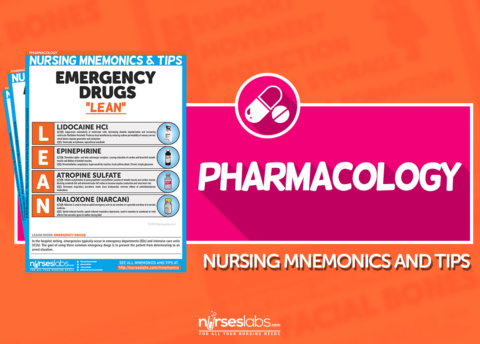
Nursing PharmacologyNursing Mnemonics and Tips
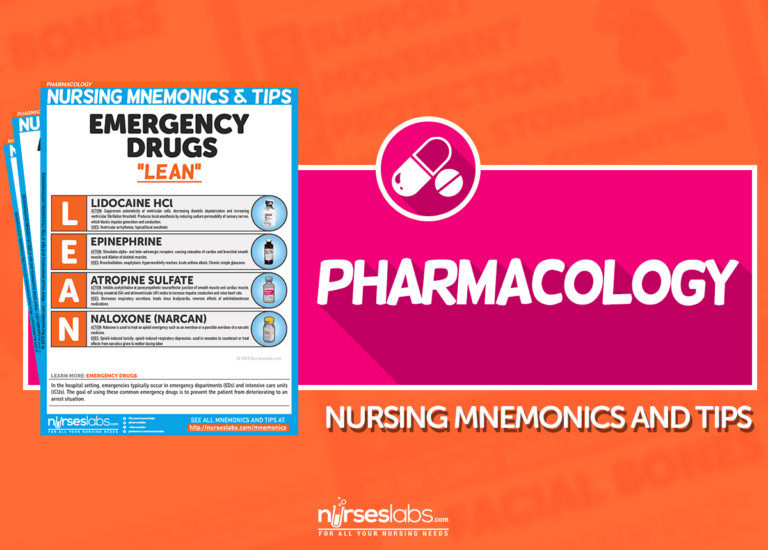
It is the goal of these nursing mnemonics to provide an easy quick-guide to simplify the concepts of pharmacology.
Here's a cheat sheet table of the common generic name drug stems and affixes that you can download and print.

Nurseslabs.com is built by nurses, for nurses. A trusted nursing education resource since 2010, written and reviewed by registered nurses, we help students prepare for exams and support working nurses with practical, up-to-date clinical guides.