

Nurses walk miles every shift, so it is easy to assume work counts as exercise. But walking the halls does not build the strength your back, legs, and core need to lift, turn, and stand for 12 hours. Regular exercise protects your body, lifts your mood, and helps you sleep after hard shifts.
This guide covers the best exercises for nurses, including squats, lunges, and push-ups, how much to aim for, and how to fit workouts around a rotating schedule.
Key Takeaways
- Adults should aim for at least 150 minutes of moderate activity a week plus muscle-strengthening exercise on 2 or more days.
- Strength training protects nurses from back injuries and fatigue.
- Squats, lunges, push-ups, planks, and glute bridges need no equipment and target the muscles nurses use most.
- Short workouts on days off and active recovery after shifts both count.
- Stretching and outdoor activities like hiking, cycling, and swimming help you recharge.
Why Exercise Matters for Nurses
Nursing is physically demanding, but most of the activity is low-intensity walking and standing, often combined with heavy, awkward lifting. Strong legs, glutes, and core muscles help you lift safely and reduce strain on your lower back, one of the most common sources of injury in nursing.
Exercise also helps with stress, sleep, and energy, which matter even more when you work nights or rotating shifts. Read more about protecting your body in our guide to back and foot pain in nurses.
How Much Exercise Do Nurses Need?
The World Health Organization recommends that adults get at least 150 to 300 minutes of moderate aerobic activity a week, or 75 to 150 minutes of vigorous activity, plus muscle-strengthening activities on two or more days a week. You do not have to do it all at once. Ten-minute sessions add up.
The Best Strength Exercises for Nurses
These five moves need no equipment and work the muscles nurses rely on most. Start with 2 sets of 8 to 12 repetitions and build up gradually.
Squats
Squats strengthen your thighs, glutes, and core, the muscles you use every time you lower a bed rail, pick something up, or help a patient stand.
- Stand with feet shoulder-width apart and toes slightly turned out.
- Push your hips back and bend your knees as if sitting in a chair, keeping your chest up.
- Lower until your thighs are about parallel to the floor, or as far as is comfortable.
- Press through your heels to stand back up.
Lunges
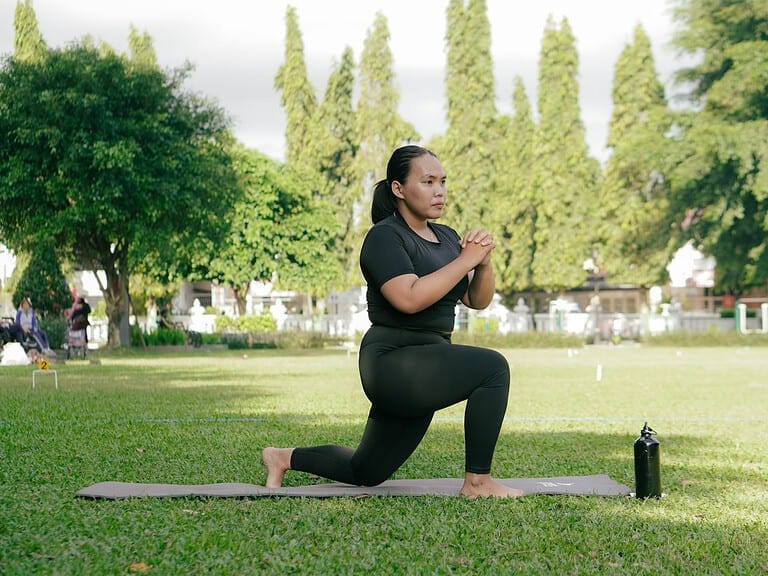
Lunges build leg strength and balance, which help when you are moving quickly around a unit or kneeling at a bedside.
- Stand tall and step one foot forward.
- Lower your back knee toward the floor until both knees are bent at about 90 degrees.
- Keep your front knee over your ankle, not past your toes.
- Push back to standing and switch legs.
Push-Ups
Push-ups strengthen your chest, shoulders, arms, and core, which helps with pushing beds, wheelchairs, and patients up in bed.
- Start in a plank position with hands slightly wider than your shoulders.
- Lower your chest toward the floor while keeping your body in a straight line.
- Push back up. Do them on your knees or against a wall if needed.
Planks
Planks build the deep core muscles that support your spine during lifting and long hours on your feet. Hold a straight line from head to heels on your forearms for 20 to 30 seconds, and build up over time.
Glute Bridges
Strong glutes take pressure off your lower back. Lie on your back with knees bent, squeeze your glutes, and lift your hips until your body forms a straight line from shoulders to knees, then lower slowly.
Cardio and Outdoor Activities
Aerobic exercise strengthens your heart and helps you handle the physical demands of long shifts. Brisk walking, cycling, swimming, dancing, and jogging all count. Getting outside for hiking, kayaking, or a weekend bike ride is also a great way to recharge your mind after a hard week.
Stretching and Mobility
Stretching keeps tight muscles from turning into pain. Focus on your hamstrings, hip flexors, calves, chest, and lower back. A few minutes after a shift, or a short yoga session on a day off, can make a big difference.
How to Fit Exercise Around 12-Hour Shifts
- Plan workouts for days off. Schedule two or three full workouts on non-work days.
- Keep shift-day workouts short. A 10-minute session of squats, push-ups, and planks before work still counts.
- Do not train hard right before sleep. Night shift nurses may find it easier to exercise after waking up rather than right after a shift.
- Use active recovery. A gentle walk or stretch the day after a run of shifts helps sore muscles recover.
- Make it social. Exercising with a coworker or friend makes it easier to stay consistent.
Before starting a new exercise program, talk to your health care provider if you have a health condition or injury. For more ways to stay well, see our guide to self-care for nurses.
Frequently Asked Questions
Quick answers to common questions about exercise for nurses.
Squats, lunges, push-ups, planks, and glute bridges are excellent choices because they strengthen the legs, glutes, and core muscles nurses use for lifting and standing, and they need no equipment.
Aim for at least 150 minutes of moderate activity a week plus muscle-strengthening exercise on two or more days, following World Health Organization guidelines.
It helps, but most walking at work is low intensity. Nurses still benefit from strength training and some moderate to vigorous activity.
Many night shift nurses find it easiest to exercise after waking up, before their shift, rather than right after work when they need to wind down for sleep.




Leave a Comment