


Shift change is one of the riskiest times in a patient’s day. In a few minutes, everything you know about your patients has to move from your head into someone else’s. A missed allergy, a pending lab, or a subtle change in mental status can easily fall through the cracks.
A structured handoff turns that rush of information into a clear, repeatable process. This guide explains SBAR, the most widely used handoff format in nursing, with real examples, a printable-style template, bedside report tips, and how to call a provider using the same structure.
Key Takeaways
- Poor handoff communication is a major contributor to preventable adverse events.
- SBAR stands for Situation, Background, Assessment, and Recommendation.
- Structured tools like SBAR and I-PASS make handoffs faster and more complete.
- Bedside handoff lets the incoming nurse see the patient and involves the patient in their care.
- End every handoff with time for questions and a clear plan for pending items.
Why Handoff Communication Matters
The Joint Commission has identified inadequate hand-off communication as a contributing factor in many sentinel events, from wrong treatments to delays in care. Handoffs happen constantly: at shift change, during transfers between units, when patients go to procedures, and when calling providers.
Research on nursing handoffs shows that structure, a quiet setting, and a chance to ask questions all improve the quality of information passed on.
What Is SBAR?
SBAR is a structured communication tool originally adapted from military communication and widely promoted in health care through programs like TeamSTEPPS.
- S, Situation: what is happening right now. Patient name, age, room, and the main concern.
- B, Background: relevant history, admitting diagnosis, allergies, code status, and recent events.
- A, Assessment: your findings, vital signs, trends, and what you think is going on.
- R, Recommendation: what needs to happen next, pending tasks, and what to watch for.
SBAR Shift Handoff Example
Here is a sample bedside handoff for a medical-surgical patient:
- Situation: “This is Mr. Reyes in Room 12, 68 years old, admitted yesterday with community-acquired pneumonia. He’s on 2 liters by nasal cannula.”
- Background: “History of COPD and type 2 diabetes. Allergic to penicillin. He’s a full code. He started IV ceftriaxone yesterday afternoon.”
- Assessment: “Temp was 38.6 at 1600, down to 37.9 now. Oxygen saturation 93 percent on 2 liters. Crackles in the right lower lobe. Blood sugar was 212 before dinner, covered with sliding scale. He’s alert and oriented, ambulating with a walker.”
- Recommendation: “Repeat chest X-ray is ordered for the morning. Recheck his temp at 2200 and blood sugar at bedtime. He’s a fall risk at night, so make sure the bed alarm is on.”
SBAR Example for Calling a Provider
SBAR works just as well when you need to call a provider about a change in condition:
- Situation: “This is Ana, the nurse caring for Ms. Lee in Room 4. I’m calling because her blood pressure dropped to 84/50.”
- Background: “She’s two days post-op from a hip replacement and received her evening dose of metoprolol at 2000.”
- Assessment: “Heart rate 58, she’s dizzy when sitting up, and urine output was 100 mL over the last 4 hours. I’m concerned about hypotension and possible bleeding.”
- Recommendation: “I’d like you to evaluate her. Would you like a fluid bolus, a CBC, and to hold her next metoprolol dose?”
Have the chart, recent vital signs, labs, and medication list in front of you before you call. Read back any verbal orders.
Simple SBAR Handoff Template
Use this checklist to build your own report sheet:
- Situation: name, age, room, attending, admitting diagnosis, reason for concern today
- Background: history, allergies, code status, isolation, procedures, key events this shift
- Assessment: vital sign trends, pain, neuro, cardiac, respiratory, GI/GU, skin, lines and drains, mobility and fall risk, mental status, labs
- Recommendation: pending labs or tests, scheduled meds, consults, family concerns, discharge plans, what to watch for
Other Handoff Tools: I-PASS and More
Some facilities use other structured formats. I-PASS (Illness severity, Patient summary, Action list, Situation awareness and contingency planning, Synthesis by receiver) is common in hospitals and emphasizes having the receiver summarize back. Whatever tool your unit uses, consistency matters more than the specific format.
Bedside Handoff Tips
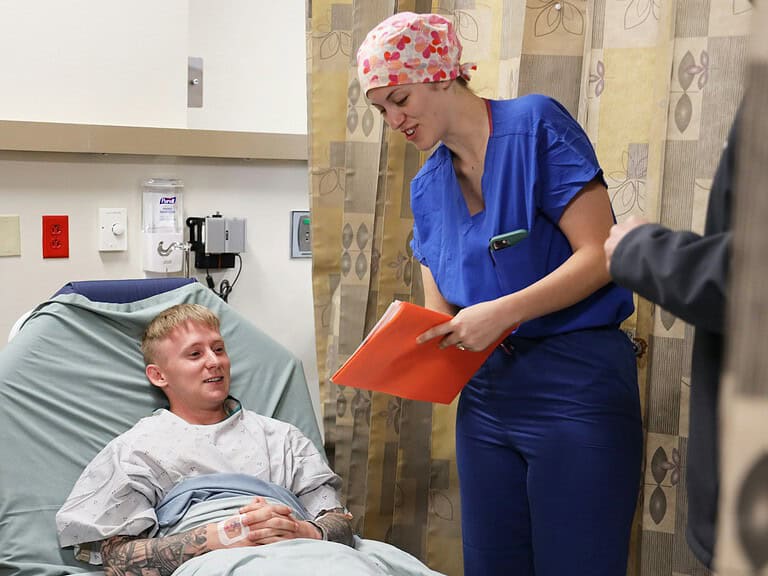
Bedside shift report means giving handoff in the patient’s room, with the patient involved when appropriate.
- Introduce the incoming nurse to the patient.
- Do a quick safety check together: ID band, IV site and pump settings, drains, fall precautions, and alarms.
- Invite the patient to add information or ask questions.
- Discuss sensitive topics, such as a new cancer diagnosis or substance use, privately outside the room.
- Protect privacy if there is a roommate by lowering your voice or stepping out for details.
Common Handoff Mistakes to Avoid
These habits cause information to get lost:
- Giving a long story instead of the key facts
- Skipping allergies, code status, or isolation
- Forgetting pending labs, tests, or time-critical meds
- Handing off during interruptions or while multitasking
- Not allowing time for questions
- Leaving tasks undone without saying so
A safe handoff is honest about what was not finished. Saying “I didn’t get to the 2000 dressing change” is better than letting the next nurse discover it.
Tips for Nursing Students and New Nurses
Write your report sheet throughout the shift, not just at the end. Practice SBAR out loud, keep it brief, and ask experienced nurses which details they want. Our 12-hour shift tips include ways to stay organized for a smoother handoff.
Frequently Asked Questions
Quick answers to common questions about nursing handoff and SBAR.
Situation, Background, Assessment, and Recommendation.
Patient identification, diagnosis, history, allergies, code status, assessment findings, recent changes, pending tasks and tests, and concerns to watch.
It lets the incoming nurse see the patient, allows safety checks, and involves patients in their care.
It varies by patient complexity, but a structured report for a stable patient often takes a few minutes. Complex patients need more time.
Yes. SBAR is commonly used to report changes in condition to providers clearly and quickly.

 {% endif %}
Leave a Comment