

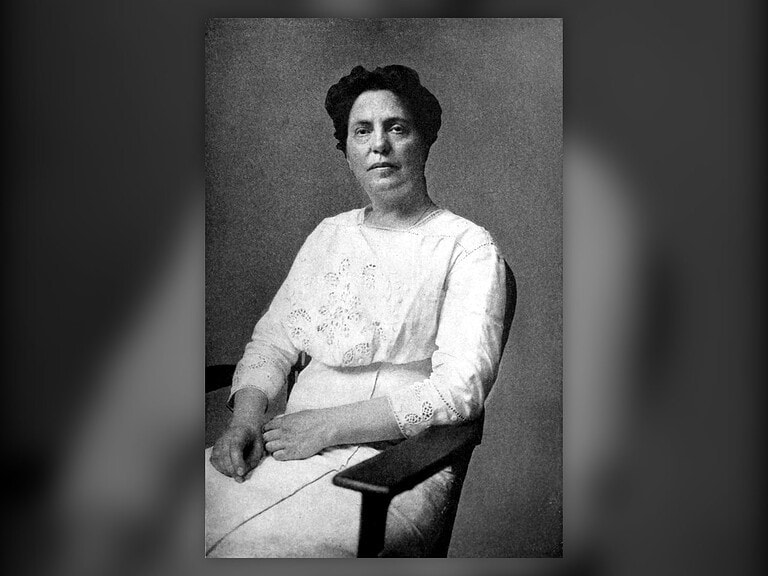
If you have ever worked as a home health, school, or community health nurse, you are following a path that Lillian Wald helped create. In the 1890s she moved into a New York City tenement neighborhood to care for families where they lived, and she coined the term public health nurse.
Wald went on to found the Henry Street Settlement and the Visiting Nurse Service of New York, and she pushed for school nursing, child welfare, and social reform. This profile covers her life and her lasting influence on community nursing.
Lillian Wald at a Glance
- Born: 10 March 1867, Cincinnati, Ohio
- Died: 1 September 1940, Westport, Connecticut, at age 73
- Trained at: New York Hospital Training School for Nurses (1891)
- Known for: Founding the Henry Street Settlement and public health nursing
- First: Coined the term public health nurse
- Honors: Hall of Fame for Great Americans (1970) and National Women’s Hall of Fame (1993)
Early Life and Nursing School
Lillian Wald was born in Cincinnati to a comfortable German Jewish family and grew up in Rochester, New York. In 1889 she entered the New York Hospital Training School for Nurses and graduated in 1891. She then took courses at the Woman’s Medical College in New York.
A Turning Point on the Lower East Side
In 1893 Wald began teaching home nursing classes to immigrant families on New York’s Lower East Side. According to her own account, a child from one of her classes led her to a tenement where the child’s mother lay sick in terrible conditions. The experience convinced her that nurses needed to go where people lived.
She left medical school and moved into the neighborhood with fellow nurse Mary Brewster so they could care for families in their homes. Their nurses’ settlement grew into the Henry Street Settlement.
Creating Public Health Nursing
Wald used the term public health nurse to describe nurses who cared for whole communities, not only individual patients in hospitals. Henry Street nurses visited homes, charged fees based on what families could pay, and taught hygiene and prevention. The service later became the Visiting Nurse Service of New York.
In 1902 Wald persuaded New York City to place a nurse in its public schools as a trial, which helped launch school nursing in the United States. In 1909 she helped create a partnership with the Metropolitan Life Insurance Company to provide home nursing to its policyholders. In 1912 she became the first president of the National Organization for Public Health Nursing.
Advocate for Social Reform
Wald believed health was tied to housing, work, and education. She proposed a federal agency to protect children, which became the US Children’s Bureau in 1912. She was a founding member of the NAACP in 1909, helped found the Women’s Trade Union League, and supported women’s suffrage and peace efforts.
During the 1918 influenza pandemic she led the Nurses’ Emergency Council in New York, coordinating nurses to care for the sick across the city. Read more in our article on nursing during the 1918 pandemic.
Legacy
Wald died in 1940. The Henry Street Settlement and the Visiting Nurse Service of New York still serve New Yorkers today. Her ideas, that nurses should care for communities, address the causes of illness, and reach people where they live, remain the foundation of public health, home health, and school nursing.
See where she fits in our nursing history timeline, and read about other pioneers such as Mary Eliza Mahoney and Clara Barton.
Frequently Asked Questions
Quick answers to common questions about Lillian Wald.
Lillian Wald was an American nurse who founded the Henry Street Settlement in New York and is considered the founder of public health nursing.
Yes. Wald is credited with coining the term to describe nurses who care for whole communities and work to prevent illness, not only treat it.
It is a community organization on New York’s Lower East Side that grew out of the nurses’ settlement Wald founded in 1893. Its visiting nurse service became the Visiting Nurse Service of New York.
In 1902 she persuaded New York City to try placing a nurse in public schools, which helped establish school nursing in the United States.
References and Sources

Leave a Comment