

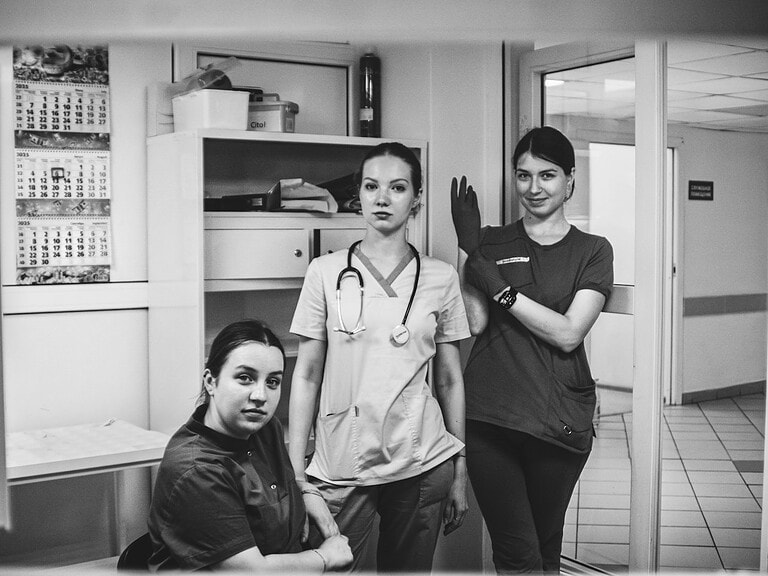
Think about your best shift ever. Chances are it wasn’t the quietest one. It was the one where your team moved like a well-rehearsed crew: someone grabbed the code cart before you asked, a coworker covered your call light while you were stuck in an isolation room, and the charge nurse knew exactly who needed help next.
That is teamwork in nursing, and it is one of the strongest predictors of safe care and a unit people actually want to work on. This guide covers what good teamwork looks like, why it matters, and practical ways to be the kind of nurse everyone wants on their shift.
Key Takeaways
- Teamwork in nursing means nurses, aides, providers, and support staff working toward the same patient goals with clear roles and open communication.
- Strong teams have fewer errors, less missed care, and lower burnout.
- Good team players communicate early, offer help before being asked, and own their mistakes.
- Tools like huddles, SBAR, closed-loop communication, and TeamSTEPPS make teamwork a habit instead of luck.
- Every nurse can improve the team, not just the charge nurse or manager.
What Is Teamwork in Nursing?
Teamwork in nursing is a group of healthcare workers sharing information, dividing tasks, and supporting each other to meet patient care goals. The team is bigger than the nurses on your unit. It includes nursing assistants, physicians, pharmacists, therapists, dietitians, unit clerks, environmental services, and the patient and family.
A team is different from a group of people who happen to work the same shift. In a real team, members know each other’s roles, trust each other to speak up, and adjust when the workload shifts. Research on healthcare teams describes the same core ingredients again and again: shared goals, clear communication, mutual support, and leadership that coordinates the work.
Why Teamwork Matters
Teamwork is not just about having a nice place to work, although that helps. It has a direct effect on patients and nurses.
- Patient safety: Many sentinel events trace back to breakdowns in communication between team members. Teams that speak up and double-check each other catch errors before they reach the patient.
- Less missed care: Units with higher teamwork scores report less missed nursing care, such as skipped turns, delayed medications, and incomplete teaching.
- Lower burnout and turnover: Nurses who feel supported by coworkers are more likely to stay. A strong team can make a heavy assignment feel manageable.
- Better learning: New nurses grow faster on units where asking questions is welcome.
Signs of a Strong Nursing Team
You can usually feel a strong team within the first hour of a shift. Look for these signs:
- People ask “Do you need help?” and mean it.
- Report is thorough, and nobody leaves without a clean handoff.
- Questions are answered without eye-rolling, whether you are a new grad or a traveler.
- Mistakes are discussed openly so the whole unit can learn from them.
- Work is shared fairly, and heavy assignments are rebalanced when acuity changes.
- The team celebrates wins, even small ones like a discharged long-term patient.
How to Be a Great Team Player
You do not need a title to make your team better. These habits make a big difference:
- Communicate early. Tell your charge nurse when you are falling behind before you are drowning. Early warnings let the team adjust.
- Offer help before you are asked. If your patients are settled, walk the hallway and ask who needs a hand with a turn, an admission, or a bath.
- Close the loop. When someone asks you to do something, repeat it back and confirm when it is done. “Got it, I’ll hang the potassium in Room 8 and let you know.”
- Know your coworkers’ roles. Understand what your nursing assistants, LPNs, and unit clerk can and cannot do so you can delegate fairly.
- Own your mistakes. Saying “I missed that, I’ll fix it” builds more trust than any excuse.
- Keep it positive. Complaining together might feel like bonding, but it drains the whole unit. Bring problems to people who can solve them.
- Say thank you. A quick thank-you to the aide who stayed late or the nurse who covered your break goes a long way.
Teamwork Tools That Actually Work
Good intentions are not enough on a busy unit. These structured tools make teamwork more reliable:
- Safety huddles: A 5 to 10 minute meeting at the start of the shift to review high-risk patients, staffing, and safety concerns.
- SBAR: A shared format for handoffs and provider calls so important details are not lost. See our SBAR handoff guide.
- Closed-loop communication: The sender gives a message, the receiver repeats it back, and the sender confirms. It prevents “I thought you said…” errors.
- Check-backs and two-challenge rule: If you have a safety concern, state it at least twice. If it is ignored, take it up the chain of command.
- TeamSTEPPS: An evidence-based teamwork program from AHRQ that teaches leadership, situation monitoring, mutual support, and communication skills.
Common Barriers to Teamwork
Even good nurses end up on struggling teams. Common barriers include short staffing, high turnover, unclear roles, hierarchy that makes people afraid to speak up, and cliques that leave some staff out. Incivility and bullying also break teams apart quickly.
You cannot fix all of these alone, but you can model the behavior you want to see, invite quieter coworkers into conversations, and bring recurring problems to your manager with specific examples and suggested solutions.
What Leaders Can Do
Charge nurses and managers set the tone. They can build stronger teams by running consistent huddles, making assignments fair and transparent, addressing incivility quickly, recognizing good teamwork in public, and giving staff a real voice in unit decisions. Training programs like TeamSTEPPS work best when leaders use the tools themselves, not just assign the modules.
Frequently Asked Questions
Here are answers to common questions about teamwork in nursing.
Teamwork improves patient safety, reduces missed care and errors, and lowers nurse burnout and turnover. Patients get safer care when team members communicate clearly and support each other.
Examples include helping a coworker turn a heavy patient, covering call lights during a code, giving a clear SBAR handoff, joining a safety huddle, and double-checking high-alert medications together.
Ask questions, communicate early when you need help, offer help when you have time, learn everyone’s roles, and thank coworkers who support you.
TeamSTEPPS is an evidence-based teamwork training program from the Agency for Healthcare Research and Quality. It teaches communication, leadership, situation monitoring, and mutual support skills for healthcare teams.



 {% endif %}
Leave a Comment