

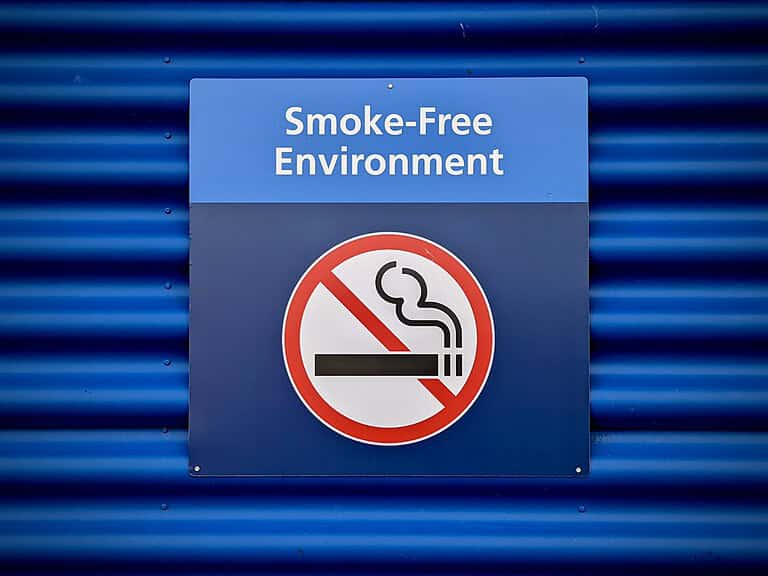
Most hospitals in the United States no longer allow smoking anywhere on their grounds, not just inside the building. Patients who smoke, visitors, and even staff now have to find another way to manage nicotine cravings during long hospital days.
For nurses, these policies raise practical questions. What do you do when a patient is desperate for a cigarette? Can you help them quit while they are in the hospital? This guide covers what tobacco-free policies are, why hospitals adopt them, common challenges, and how nurses can turn a hospital stay into a chance to quit.
Key Takeaways
- Tobacco-free hospital policies ban smoking, and often vaping and all tobacco use, on the entire campus.
- They protect patients, visitors, and staff from secondhand smoke and model healthy behavior.
- Nicotine withdrawal can cause anxiety, irritability, and agitation, so patients may need nicotine replacement therapy.
- A hospital stay is a powerful time to quit. Nurses can ask, advise, and connect patients to cessation support.
- Enforcing policies works best with compassion, clear communication, and treatment for withdrawal.
What Is a Tobacco-Free Hospital Policy?
Early hospital smoking bans applied only to indoor spaces, often with designated outdoor smoking areas. Today, many hospitals are completely tobacco-free campuses. Smoking, vaping, and other tobacco products are banned everywhere on hospital property, including parking lots and garages. Policies usually apply to patients, visitors, contractors, and employees.
Why Hospitals Go Tobacco-Free
Hospitals adopt these policies for several reasons:
- Health protection: There is no safe level of secondhand smoke exposure. Smoke-free policies protect patients, especially those with heart and lung disease, children, and pregnant patients.
- Safety: Smoking near oxygen and other flammable materials is a fire risk.
- Modeling health: Healthcare facilities send a clear message by supporting a tobacco-free environment.
- Supporting quitting: Smoke-free environments make it easier for patients and staff to quit and stay quit.
Challenges Nurses Face
Tobacco-free policies are not always easy at the bedside. Patients in withdrawal may become anxious, irritable, or agitated, and some try to leave the unit to smoke, which can be unsafe if they are on telemetry, oxygen, or IV therapy, or at risk for falls. Some patients leave against medical advice. Staff who smoke also face long shifts without a break to smoke. Nurses can feel caught between enforcing rules and caring for a distressed patient.
How Nurses Can Help Patients
Treating nicotine withdrawal and offering support makes policies easier to follow and can help patients quit for good:
- Ask every patient about tobacco and vaping use on admission.
- Assess for withdrawal and talk with the provider about nicotine replacement therapy, such as patches, gum, or lozenges.
- Advise quitting in a supportive, non-judgmental way. Advice from a health professional increases the chance of quitting.
- Connect to resources, such as a quitline or the hospital’s cessation program, before discharge.
- Teach coping strategies for cravings, like distraction, deep breathing, and short walks when safe.
- Document tobacco status, interventions, and referrals.
Supporting Staff Who Smoke
Nurses and other staff who use tobacco may struggle with campus-wide bans. Hospitals can support them with free cessation programs, nicotine replacement, and wellness benefits. If you smoke and want to quit, ask your employee health department about resources. For more on caring for yourself on long shifts, see self-care for nurses and occupational hazards in nursing.
Frequently Asked Questions
Here are answers to common questions about tobacco-free hospitals.
Hospitals go tobacco-free to protect patients, visitors, and staff from secondhand smoke, reduce fire risk near oxygen, model healthy behavior, and support people who want to quit.
Most U.S. hospitals are tobacco-free campuses, so patients cannot smoke anywhere on the property. Patients may be offered nicotine replacement therapy to manage cravings.
Nurses can assess for withdrawal, ask the provider about nicotine replacement therapy, teach coping strategies, and connect patients to quitting resources.
Many hospital policies ban all tobacco and nicotine products, including e-cigarettes and vapes, on the entire campus.
References and Sources



 {% endif %}
Leave a Comment