

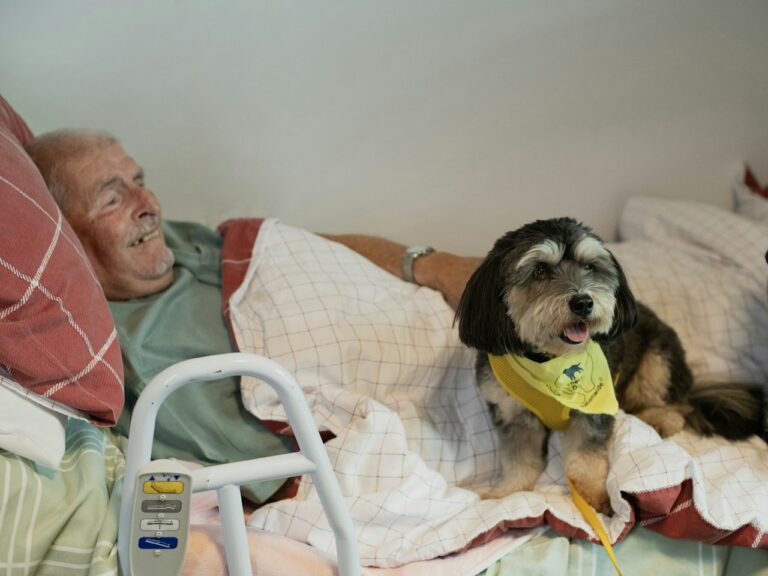
A therapy dog walks onto the unit and suddenly the mood changes. A patient who has not smiled in days reaches out to pet it. A child forgets about the IV for a few minutes. Animals can bring real comfort to people in the hospital.
They also bring questions. Is that dog a service animal or a pet? Can a patient’s cat visit? What about allergies and infection risk? This guide explains the different types of animals nurses see in healthcare settings, their benefits and risks, and what nurses need to know to keep everyone safe.
Key Takeaways
- Service animals, therapy animals, emotional support animals, and personal pets are treated differently in hospitals.
- Under the ADA, service animals are dogs (and sometimes miniature horses) trained to perform tasks for a person with a disability, and they are generally allowed where the public can go.
- Therapy animals visit through organized programs with screening, training, and infection control rules.
- Benefits include less stress and anxiety and better mood. Risks include infections, allergies, bites, and falls.
- Nurses check facility policy, screen patients for allergies and immune status, and practice hand hygiene before and after contact.
Types of Animals in Healthcare Settings
Not all animals in a hospital have the same role or rights:
- Service animals: Under the Americans with Disabilities Act, these are dogs individually trained to do work or perform tasks for a person with a disability, like guiding a person who is blind or alerting to seizures. Miniature horses may also qualify in some cases.
- Therapy animals: Usually dogs that visit patients with a trained handler as part of an animal-assisted activity or therapy program.
- Emotional support animals: Provide comfort by their presence but are not trained to perform specific tasks. They are not service animals under the ADA and do not have the same access rights in hospitals.
- Personal pets: Some facilities allow visits from a patient’s own pet in special situations, such as end-of-life care, under strict policy.
Benefits of Animals for Patients
Animal-assisted activities can reduce anxiety, stress, loneliness, and perceived pain, improve mood, and give patients something to look forward to during long hospital stays. They are especially valued in pediatrics, long-term care, rehabilitation, mental health, and hospice. Staff often benefit too, with a short break and a lift in morale.
Risks and How to Reduce Them
Infection control experts have published recommendations to keep animal visits safe. Main risks and precautions include:
- Infections: Animals can carry bacteria such as MRSA and C. difficile. Avoid visits with patients in isolation, immunocompromised patients, and those with open wounds unless approved.
- Allergies and phobias: Ask patients and roommates before any visit.
- Bites and scratches: Use only screened, trained animals with experienced handlers.
- Falls: Keep animals leashed and away from lines, tubes, and fall-risk patients.
- Hand hygiene: Patients, staff, and handlers clean hands before and after contact. See our hand hygiene guide.
Service Animal Rules Nurses Should Know
Hospitals generally must allow service animals wherever the public and patients are allowed, such as patient rooms and waiting areas. They may be excluded from areas where they could compromise a sterile environment, such as operating rooms. When it is not obvious what a dog does, staff may ask only two questions: whether the dog is required because of a disability, and what work or task it has been trained to perform. Staff cannot ask for documentation or a demonstration. A service animal can be removed if it is out of control or not housebroken. The handler is responsible for its care, though staff may help arrange care if the patient cannot provide it.
The Nurse’s Role
Before a visit, check facility policy, confirm the patient and roommate agree, screen for allergies, immune status, isolation precautions, and open wounds, and secure lines and equipment. During the visit, supervise patient safety. Afterward, perform hand hygiene, assess the patient, and document the visit and the patient’s response. If a patient asks for a personal pet visit, explain the policy and contact the right department for approval.
Frequently Asked Questions
Here are answers to common questions about animals in hospitals.
Yes. Under the ADA, service animals are generally allowed wherever patients and the public can go, but may be excluded from sterile areas such as operating rooms.
Emotional support animals are not service animals under the ADA, so hospitals are not required to allow them. Some facilities allow pet visits under specific policies.
Therapy dog visits can reduce stress, anxiety, loneliness, and perceived pain and improve mood for patients and staff.
Screen patients for isolation, immune status, and wounds, use only trained and screened animals, and perform hand hygiene before and after contact.



 {% endif %}
Leave a Comment