

Learn about Lydia Hall and her nursing theory “Care, Cure, Core” model in this nursing theories study guide. Please get to know Lydia Hall’s biography, a career as a nurse, and an in-depth discussion of her nursing theory to tackle the major concepts, assumptions, and nursing application.
Biography of Lydia E. Hall
Lydia Eloise Hall (September 21, 1906 – February 27, 1969) was a nursing theorist who developed the Care, Cure, Core model of nursing. Her theory defined Nursing as “a participation in care, core and cure aspects of patient care, where CARE is the sole function of nurses, whereas the CORE and CURE are shared with other members of the health team.”
She was an innovator, motivator, mentor to nurses in all phases of their careers, and an advocate for chronically ill patients. She worked to involve the community in public health issues.
Early Life of Lydia Hall
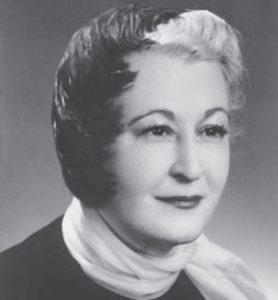
Lydia Hall was born on September 21, 1906, in New York City as Lydia Eloise Williams. She was the eldest child of Louis V. Williams and Anna Ketterman Williams and was named after her maternal grandmother. Her brother, Henry, was several years younger. At a young age, her family decided to move to York, Pennsylvania, where her father was a general practice physician.
Education
Lydia Hall graduated from York Hospital School of Nursing in 1927 with a diploma in nursing. However, she felt as if she needed more education. She entered Teacher’s College at Columbia University in New York and earned a Bachelor of Science degree in public health nursing in 1932. After several years in clinical practice, she resumed her education and received a master’s degree in the teaching of natural life sciences from Columbia University in 1942. Later, she pursued a doctorate and completed all of the requirements except for the dissertation.
In 1945, she married Reginald A. Hall, who was a native of England.
Career and Appointments
Just like any other nurses who have passion for their craft, Lydia Hall’s nursing experience was functional, proficient as well as hypothetical. She spent her early years as a registered nurse working for the Life Extension Institute of the Metropolitan Life Insurance Company in Pennsylvania and New York, where the main focus was on preventative health. She also had the opportunity to work for the New York Heart Association from 1935 to 1940. In 1941, she became a staff nurse with the Visiting Nurses Association of New York and stayed there until 1947. Hall also managed to be an advocate of community involvement in public health issues. And in 1950, she became a professor at Teacher’s College at Columbia, where she taught nursing students to function as medical consultants. She was also a research analyst in the field of cardiovascular disease.
Hall’s interest and research in the field of rehabilitation of chronically ill patients brought her to develop her now-famous Care, Cure, Core Theory. She was always interested in rehabilitative nursing and the role the professional nurse played in its recovery and welfare. With these, she became involved in establishing the Loeb Center for Nursing and Rehabilitation at the Montefiore Medical Center (MMC) in the Bronx, New York. The Solomon and Betty Loeb Memorial Home for Convalescents had provided community services at Montefiore Hospital since 1905. In 1957, the Board of Trustees decided to expand the services and enter into a hospital partnership to construct a new facility. Dr. Martin Cherkasky, director of the hospital, contacted Hall to lead the venture, and she worked from 1957 to 1962 on all aspects of the project, including construction and administration. As the founder and the first director, she was determined that nurses were in charge of everyday activities and transactions.
Hall then worked as the first director of the Loeb Center for Nursing. Her nursing experience was in clinical nursing, nursing education, research, and a supervisory role. Through her leadership, the nursing-centered care reduced rehabilitation time and length of stay by up to one-half to one-third. The center became a prime example of nursing-led care, and many centers in the United States and Canada followed its principles. During her time there, Hall authored 21 publications and bulk of articles and addresses regarding her theory.
Care, Cure, Core Theory
Lydia Hall used her knowledge of psychiatry and nursing experiences in the Loeb Center to formulate her theory. Also known as “the Three Cs of Lydia Hall,” it contains three independent but interconnected circles: the core, the care, and the cure.
The core is the patient receiving nursing care. The core has goals set by him or herself rather than by any other person and behaves according to their feelings and values.
The cure is the attention given to patients by medical professionals. Hall explains in the model that the nurse shares the cure circle with other health professionals, such as physicians or physical therapists. These are the interventions or actions geared toward treating the patient for whatever illness or disease they are suffering from.
The care circle addresses the role of nurses and is focused on performing the task of nurturing patients. This means the “motherly” care provided by nurses, which may include comfort measures, patient instruction, and helping the patient meet his or her needs when help is needed.
Hall’s theory emphasizes the total patient rather than looking at just one part and depends on all three components of the theory working together.
Works of Lydia Hall
Aside from being a nurse, Lydia Hall also managed to balance her time in writing. In the 1960s, she authored 21 publications and many articles regarding the Loeb Center and her long-term care and chronic disease control theories. Her work was presented in “Nursing: What Is It?” in The Canadian Nurse. In 1969, it was discussed in “The Loeb Center for Nursing and Rehabilitation” in the International Journal of Nursing Studies. In her innovative work at the Loeb Center, Hall argued that a need exists in society to provide hospital beds grouped into units that focus on the delivery of therapeutic nursing. The Loeb plan has been seen in many ways as similar to what later emerged as “primary nursing.”
Awards and Honors of Lydia Hall
In 1967, Lydia Hall received the Teacher’s College Nursing Education Alumni Association (TCNEAA) Achievement in Nursing Practice Award and was their Nursing Hall of Fame inductee. In 1984, she was inducted into the American Nurses Association (ANA) Hall of Fame.
Death
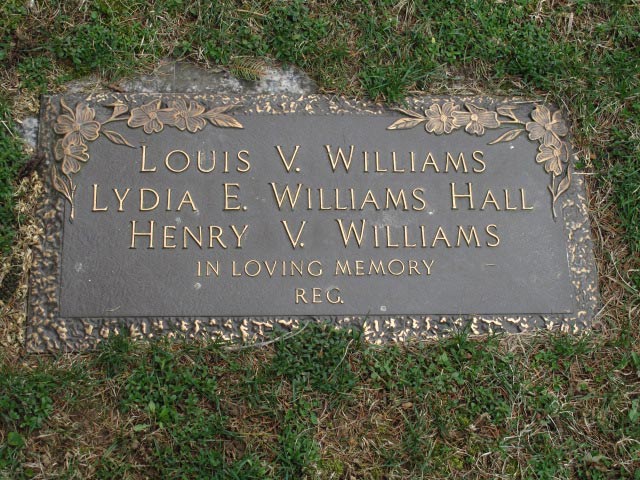
Hall died on February 27, 1969, at Queens Hospital in New York. Genrose Alfano continued her work at the Loeb Center until the center’s focus was changed to that of custodial care in 1985.
Lydia Hall’s: Care, Core, Cure
Nursing theory, in line with Lydia Hall, is nothing short of revolutionary. In the 1960s, she put down, in her own simple words, her thoughts about nursing. She did not consider herself a nurse theorist but instead talked about her transparent thoughts and remarkable nursing care ideas as she learned them over the years. These lead to the development of her “Care, Cure, Core Theory,” also known as the “Three Cs of Lydia Hall.”
Description
Lydia Hall’s theory define Nursing as the “participation in care, core and cure aspects of patient care, where CARE is the sole function of nurses, whereas the CORE and CURE are shared with other members of the health team.” The major purpose of care is to achieve an interpersonal relationship with the individual to facilitate the development of the core.
As Hall says, “To look at and listen to self is often too difficult without the help of a significant figure (nurturer) who has learned how to hold up a mirror and sounding board to invite the behaver to look and listen to himself. If he accepts the invitation, he will explore the concerns in his acts. As he listens to his exploration through the reflection of the nurse, he may uncover in sequence his difficulties, the problem area, his problem, and eventually the threat which is dictating his out-of-control behavior.”
Assumptions
Hall’s Care, Cure, Core Theory assumptions are as follows: (1) The motivation and energy necessary for healing exist within the patient rather than in the healthcare team. (2) The three aspects of nursing should not be viewed as functioning independently but as interrelated. And lastly, (3) The three aspects interact, and the circles representing them change the size, depending on the patient’s total course of progress.
Major Concepts of Care, Core, Cure
The following the major concepts of Lydia Hall’s Care, Core, Cure nursing theory, including their definitions.
Individual
The individual human who is 16 years of age or older and past the acute stage of long-term illness focuses on nursing care in Hall’s work. The source of energy and motivation for healing is the individual care recipient, not the health care provider. Hall emphasizes the individual’s importance as unique, capable of growth and learning, and requiring a total person approach.
Health
Health can be inferred as a state of self-awareness with a conscious selection of optimal behaviors for that individual. Hall stresses the need to help the person explore the meaning of his or her behavior to identify and overcome problems through developing self-identity and maturity.
Society and Environment
The concept of society or environment is dealt with concerning the individual. Hall is credited with developing Loeb Center’s concept because she assumed that the hospital environment during treatment of acute illness creates a difficult psychological experience for the ill individual. Loeb Center focuses on providing an environment that is conducive to self-development. In such a setting, the focus of the nurses’ action is the individual. Any actions taken concerning society or the environment are to assist the individual in attaining a personal goal.
Nursing
Nursing is identified as participating in the care, core, and cure aspects of patient care.
Subconcepts
Lydia Hall’s theory has three components which are represented by three independent but interconnected circles. The three circles are the core, the care, and the cure. The size of each circle constantly varies and depends on the state of the patient.
The Care Circle
According to the theory, nurses are focused on performing the noble task of nurturing patients. This circle solely represents the role of nurses and is focused on performing the task of nurturing patients. Nurturing involves using the factors that make up the concept of mothering (care and comfort of the person) and provide for teaching-learning activities.
The care circle defines a professional nurse’s primary role, such as providing bodily care for the patient and helping the patient complete such basic daily biological functions as eating, bathing, elimination, and dressing. When providing this care, the nurse’s goal is the comfort of the patient.
Moreover, the nurse’s role also includes educating patients and helping a patient meet any needs he or she is unable to meet alone. This presents the nurse and patient with an opportunity for closeness. As closeness develops, the patient can share and explore feelings with the nurse.
The Core Circle
The core, according to Hall’s theory, is the patient receiving nursing care. The core has goals set by him or herself rather than by any other person and behaves according to their feelings and values. This involves the therapeutic use of self and is shared with other members of the health team.
This area emphasizes the patient’s social, emotional, spiritual, and intellectual needs concerning family, institution, community, and the world. This can help the patient verbally express feelings regarding the disease process and its effects by using the reflective technique. Through such expression, the patient can gain self-identity and further develop maturity.
The professional nurse uses the reflective technique to act as a mirror to the patient to help the latter explore his or her own feelings regarding his or her current health status and related potential changes in lifestyle.
Motivations are discovered through the process of bringing into awareness the feelings being experienced. With this awareness, the patient can now make conscious decisions based on understood and accepted feelings and motivation.
The Cure Circle
As explained in this theory, the cure is nursing, which involves the administration of medications and treatments. Hall explains in the model that the nurse shares the cure circle with other health professionals, such as physicians or physical therapists.
In short, these are the interventions or actions geared toward treating the patient for whatever illness or disease he or she is suffering from. During this aspect of nursing care, the nurse is an active advocate of the patient.

As seen in the figure above, the three interlocking circles may change in size and overlap concerning the patient’s phase in the disease process. A nurse functions in all three circles but to different degrees.
For example, in the care phase, the nurse gives hands-on bodily care to the patient about daily living activities such as toileting and bathing. In the curing phase, the nurse applies medical knowledge to the treatment of the person. In the core phase, the nurse addresses the patient’s social and emotional needs for effective communication and a comfortable environment.
Strengths
Lydia Hall’s model appears to be completely and simply logical. Her work may be viewed as the philosophy of nursing.
The three Cs (care, core, and cure) in this theory were unique. In all the model circles, the nurse is present, although the nurse’s focus is on the care circle.
Weaknesses
Lydia Hall’s model is considered to be plain and simple in its presentation. However, the receptiveness and resilience necessary for its utilization and function may not be so simple for nurses whose personality, educational preparation, and experience have not prepared them to function with minimal structure. This and the self-imposed age and illness requirements limit the generalizability.
The age requirement for applying her theory 16 years of age and above limits the theory since it cannot be disregarded that nurses are faced with pediatric clients now and then.
The concept of a patient aggregate, such as having families and communities as the focus of nursing practice, was not tackled. It is purely on the individual himself. Although, the role of the family or the community within the patient’s environment was modestly discussed.
Conclusion
Lydia Hall used her knowledge of psychiatry and nursing experiences in the Loeb Center as a framework for formulating the Care, Core, and Cure Theory. Her model contains three independent but interconnected circles. The three circles are the core, the care, and the cure.
The core is the patient. The cure refers to the medical and nursing interventions, and the care is the nurturing provided by nurses. Nursing functions in all three of the circles but shares them to different degrees with other disciplines.
Even though Hall confined her concepts for patients with the age of 16 years and above, the concepts of care, core and cure can still be applied to every age group, but again, none was specified.
This theory emphasizes the importance of the total patient rather than looking at one part or aspect. There is also an emphasis on all three aspects of the theory, the three Cs, functioning together.
And for a nurse to successfully apply Hall’s theory, the individual must pass an acute stage of illness. In this theory, no nursing contact with healthy individuals, families, or communities contradicts the concept of health maintenance and disease prevention.
Recommended Resources
Recommended books and resources to learn more about nursing theory:
Disclosure: Included below are affiliate links from Amazon at no additional cost from you. We may earn a small commission from your purchase. For more information, check out our privacy policy.
Nursing Theorists and Their Work (Alligood)
The 2025 edition of the classic guide to major nursing theorists, covering each theorist’s background, key concepts, and use in practice, education, and research.

Knowledge Development in Nursing: Theory and Process (Chinn & Kramer)
The 2025 edition explains how nursing knowledge is developed and how theory connects to ethical, evidence-based practice.
Nursing Theories and Nursing Practice (Smith)
The 2025 edition presents grand and middle-range nursing theories with chapters written by the theorists and scholars who use them in practice.

Theoretical Basis for Nursing (McEwen & Wills)
The newest edition (2025) of this widely used textbook on nursing and borrowed theories, with clear examples of how theory guides practice and research.

Middle Range Theory for Nursing (Smith & Liehr)
A focused guide to middle-range theories that are close to everyday practice, with examples of how each theory applies to client care and research.

Strategies for Theory Construction in Nursing (Walker & Avant)
A step-by-step guide to concept analysis and theory development, a standard reference for graduate nursing theory courses.

Nursing Research: Methods and Critical Appraisal for Evidence-Based Practice (LoBiondo-Wood & Haber)
The 2025 edition teaches how to read, critique, and apply research findings to evidence-based nursing practice.

Polit & Beck’s Nursing Research: Generating and Assessing Evidence
The 2024 edition of the leading nursing research textbook, covering research design, methods, and how to assess evidence for practice.

See Also
Recommended site resources related to nursing theory:
Nursing Theories and Theorists: The Definitive Guide
What nursing theory is, why it matters, its history and types, plus summaries of major nursing theories.
Read the guide → QuizWhich Nursing Theorist Are You?
A quick, fun quiz that matches your nursing values to a famous nursing theorist.
Take the quiz →More Theorists to Explore
References
- Alligood, M., & Tomey, A. (2010). Nursing theorists and their work, seventh edition (No ed.). Maryland Heights: Mosby-Elsevier.
- Hall, L. (1965) Another view of nursing care and quality. Address given at Catholic University Workshop, Washington, D.C. In George, J. (Ed.). Nursing theories: the base for professional nursing practice. Norwalk, Connecticut: Appleton & Lange.
- George, J.B.; Nursing Theories: The Base for Professional Nursing Practice; 2000.
External Links
- Lydia Hall Memorial – A snippet of an article from the American Journal of Nursing
Further Reading
- Alligood, M., & Tomey, A. (2010). Nursing theorists and their work, seventh edition. Maryland Heights: Mosby-Elsevier.
With contributions by Wayne, G. (Biography), Vera, M. Ramirez, Q.




Leave a Comment