
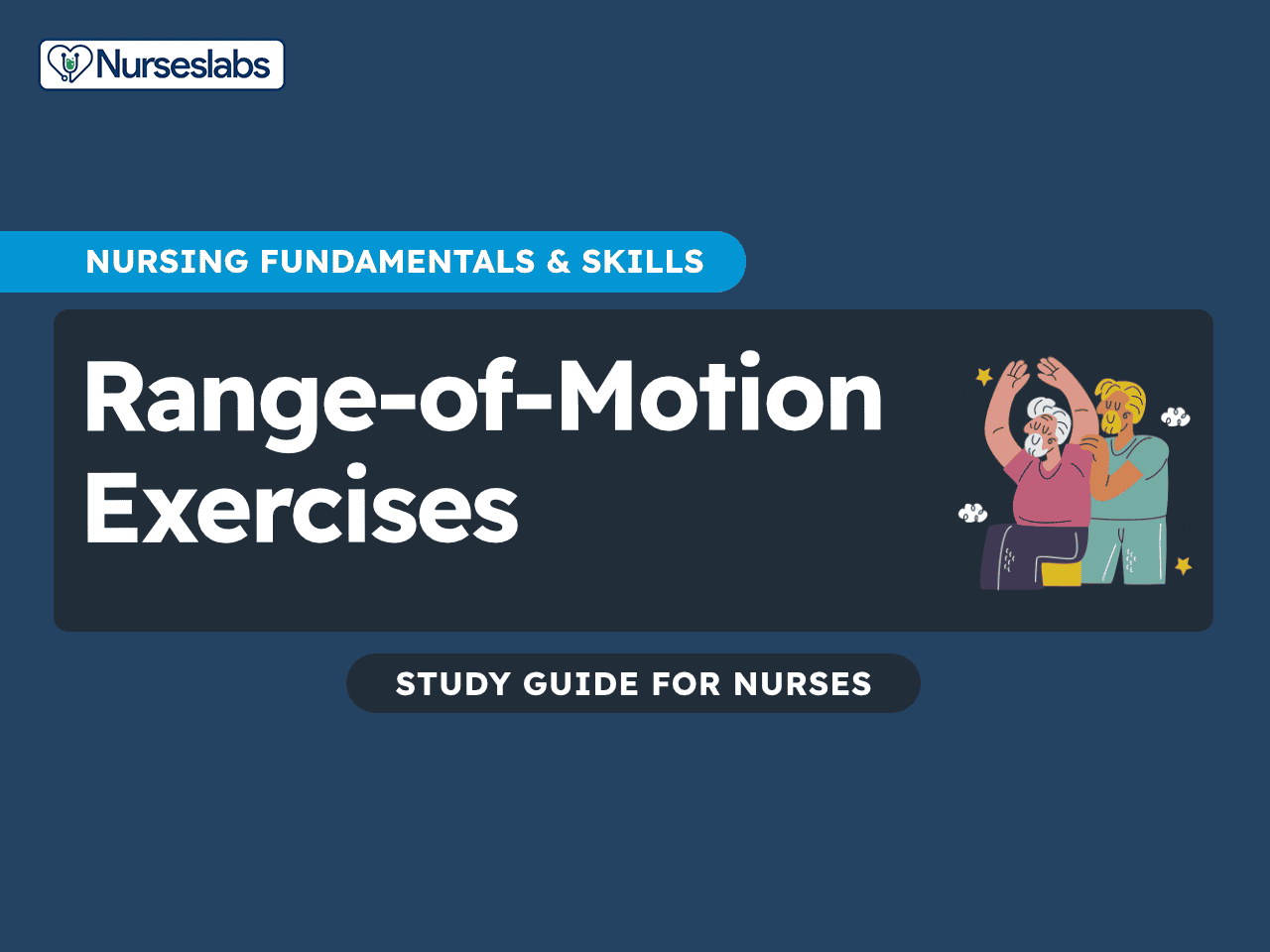
Range of motion (ROM) exercises are a cornerstone of nursing practice, particularly in caring for patients with limited mobility, those recovering from surgery or injury, and individuals with chronic conditions such as arthritis or stroke. These exercises are important for maintaining joint flexibility, preventing complications of immobility, and promoting patient comfort and function.
Definition of Range of Motion Exercises
Range of motion (ROM) exercises are specific movements performed to maintain or improve the ability of joints to move through their normal range. These exercises involve moving muscles and joints in various directions to keep them functional and healthy. ROM exercises are categorized into three main types: passive, active, and active-assistive.
Types of Range of Motion Exercises (ROM)
Range of Motion (ROM) exercises involve different levels of patient participation to maintain joint flexibility and strength. These exercises range from complete assistance to full independence, depending on the patient’s condition and abilities. Here are the following types
1. Passive Range of Motion (PROM).
The nurse or caregiver moves the patient’s joints through the full range of motion without the patient’s assistance. This is typically done for patients who are unconscious, paralyzed, or otherwise unable to move.
2. Active Range of Motion (AROM).
The patient independently performs the movements without assistance. This type is used when the patient has the strength and coordination to move joints independently.
3. Active-Assistive Range of Motion (AAROM).
The patient performs the exercises with some help from a nurse or caregiver. This method supports muscle strengthening and coordination development.
Benefits of ROM Exercises
Range of motion (ROM) exercises provide numerous therapeutic benefits that support musculoskeletal health and patient mobility. These movements not only prevent complications from immobility but also promote strength, flexibility, and independence in daily activities.
- Prevent muscle atrophy and joint contractures.
ROM exercises help keep muscles strong and joints flexible. This prevents weakening and stiffness that can result in permanent contractures. - Enhance muscle strength and endurance.
Performing active or assisted movements builds muscle tone. This supports better posture, stability, and independence. - Maintain or improve joint flexibility and mobility.
Moving joints regularly promotes lubrication and flexibility. It helps patients retain or regain ease of movement. - Promote circulation and reduce the risk of thromboembolism.
ROM movements boost blood flow, decreasing the occurrence of blood clots. They also support tissue health through better oxygen delivery. - Decrease pain and stiffness.
Gentle exercises reduce joint stiffness and discomfort. They increase comfort and encourage physical activity. - Support coordination and balance.
Regular movement improves neuromuscular control and body awareness. It also helps patients maintain balance and prevent falls. - Improve functional independence.
ROM exercises support free movement by maintaining joint flexibility and muscle strength. This promotes the ability to perform daily tasks like dressing, bathing, and walking with minimal assistance and greater independence.
Contraindications and Precautions
A comprehensive assessment must be conducted before initiating ROM exercises. Nurses should avoid or modify exercises in the presence of.
- Acute joint inflammation or infection. Moving inflamed or infected joints can worsen pain and tissue damage. Exercise should be deferred until inflammation subsides.
- Recent fractures or surgeries without clearance. Movement may interfere with healing or cause reinjury. ROM should be initiated only when approved by the physician.
- Severe osteoporosis. Fragile bones are at high risk of fractures with minimal stress. ROM exercises must be gentle and carefully supervised.
- Severe cardiopulmonary conditions. Activity can increase oxygen demand and cardiac workload. Patients should be assessed thoroughly to avoid decompensation.
- Uncontrolled pain. Pain may limit participation and lead to further muscle guarding. Pain control should be established before starting exercises.
- Muscle or tendon rupture. Movement can worsen damaged tissues. ROM should be postponed until healing is sufficient or therapy specialists guide it.
Movements Involved in ROM Exercises
These movements are typically applied to each major joint, including the neck, shoulders, elbows, wrists, fingers, hips, knees, ankles, and toes. Consistently performing these motions supports flexibility, mobility, and joint health.
| Movement Term | Definition | Examples |
| Flexion | Bending a joint to decrease the angle between two body parts. | Bending the elbow or knee; flexing the neck to lower the chin toward the chest. |
| Extension | Straightening a joint to increase the angle between two body parts. | Straightening the elbow or knee; lifting the head from a flexed to neutral position. |
| Abduction | Moving a limb away from the midline of the body. | Lifting the arm or leg sideways away from the body; spreading the fingers apart. |
| Adduction | Moving a limb toward the midline of the body. | Bringing the arm or leg back toward the body. |
| Rotation | Turning a body part around its axis. | Rotating the head side to side; rotating the shoulder inward or outward. |
| Internal Rotation | Moving a limb inward toward the midline of the body. | Rotating the shoulder inward so the thumb points toward the body. |
| External Rotation | Moving a limb outward, away from the midline of the body. | Rotating the shoulder outward so the palm faces forward or up. |
| Circumduction | Moving a body part in a circular motion. | Making circles with the arm at the shoulder joint. |
| Dorsiflexion | Bending the foot upward toward the shin. | Lifting the toes off the ground while keeping the heel down. |
| Plantarflexion | Pointing the foot downward away from the leg. | Standing on tiptoes; pressing a gas pedal. |
| Supination | Rotating the forearm or hand so the palm faces upward. | Holding a bowl of soup (palm up). |
| Pronation | Rotating the forearm or hand so the palm faces downward. | Pouring out a bowl of soup (palm down). |
| Inversion | Turning the sole of the foot inward. | Rolling onto the outer edge of the foot. |
| Eversion | Turning the sole of the foot outward. | Rolling onto the inner edge of the foot. |
Nursing Assessment
Before starting ROM exercises, a thorough assessment confirms proper technique and promotes safety. Nurses should evaluate physical and mental status and identify any restrictions. This step helps guide the exercise plan and avoid complications.
- Assess the patient’s level of consciousness, pain, and willingness to participate. Understanding the patient’s mental status and comfort level helps determine their ability to engage in exercises safely. It also fosters cooperation and prevents harm during the procedure.
- Evaluate joint mobility, muscle strength, and signs of stiffness or swelling. This will identify baseline function and any limitations that may affect the type or intensity of ROM exercises. It will also help tailor the plan to each patient’s condition.
- Review medical history and physician orders. The chart check confirms no contraindications and that the ROM is appropriate for the patient’s diagnosis and recovery stage.
- Inspect for contractures, deformities, or assistive devices. Visual and physical inspection highlight areas needing extra care. This also helps adjust the technique or support joints properly.
How to Perform Range-of-Motion Exercises
Range of motion exercises should be done gently, with attention to the patient’s comfort and any signs of pain or resistance. Proper technique and consistency are fundamental to achieving the full benefit while preventing injury.
1. Explain the procedure clearly, including its purpose and how it will be performed.
Explanation fosters cooperation, reduces anxiety, and allows the patient to ask questions or express concerns.
2. Wash hands thoroughly using proper technique before touching the patient. Apply gloves if needed.
This prevents the transmission of pathogens and protects both the patient and nurse from infection.
3. Close curtains or doors and make sure the room is warm and well-lit. Lower the bed rail on the working side and adjust the bed height.
Creating a safe and private space promotes dignity and allows ergonomic access for the nurse.
4. Assist the patient into a comfortable and supportive position, such as supine, side-lying, or sitting, depending on the joints to be exercised.. Use pillows for alignment.
Proper positioning promotes joint accessibility, lessens muscle strain, and improves exercise effectiveness.
5. Support the moving joint by placing one hand above and one below the joint while guiding the movement.
Joint support prevents unnecessary stress, maintains alignment, and reduces the risk of injury.
6. Begin ROM Exercises from Head to Toe. Start with the neck (if allowed), then move systematically to shoulders, elbows, wrists, fingers, hips, knees, ankles, and toes.
All joints are exercised following a consistent sequence, promoting an organized routine. Each movement is typically repeated 5-10 times, as tolerated.
Range of Motion Exercises from Head to Toe
| Body Part | Movement | Technique | Purpose / Benefit |
| 6.1 Neck (Cervical Spine) | Flexion & Extension | Support head gently. Guide chin toward chest, then return upright. | Maintains flexibility and prevents stiffness (especially in immobile patients). |
| Lateral Flexion & Rotation | Tilt head gently toward each shoulder; turn slowly side to side. | Supports comfortable positioning; eases turning or repositioning. | |
| 6.2 Shoulder | Flexion & Extension | Raise arm forward and upward, then return to the side. | Maintains mobility for reaching, lifting, and upper-body tasks. |
| Hyperextension | Move arm gently behind the torso (keep joint supported). | Promotes ability to reach backward; reduces joint immobility. | |
| Abduction & Adduction | Lift arm out to side; bring it back across the body. | Useful for daily activities like dressing and side-reaching. | |
| Internal & External Rotation | Elbow bent: rotate arm inward to abdomen, then outward away from body. | Improves upper limb coordination; assists with grooming and hygiene. | |
| Circumduction | Move extended arm in a wide circular motion. | Enhances overall flexibility by engaging multiple directions. | |
| 6.3 Elbow | Flexion & Extension | Bend elbow (hand to shoulder), then straighten arm. | Maintains function for self-care (feeding, bathing). |
| 6.4 Forearm | Pronation & Supination | Rotate forearm palm-down, then rotate palm-up. | Essential for using utensils, writing, or buttoning clothing. |
| 6.5 Wrist | Flexion & Extension | Bend wrist downward, then return to straight. | Preserves range needed for holding and supporting objects. |
| Hyperextension | Gently move back of hand upward beyond neutral. | Supports hand strength and pushing movements. | |
| Radial & Ulnar Deviation | Tilt wrist toward thumb side, then toward pinky side. | Improves mobility for typing, gripping, and rotating motions. | |
| 6.6 Fingers | Flexion & Extension | Curl each finger into palm, then straighten completely. | Prevents stiffness; maintains ability to grip and hold. |
| Abduction & Adduction | Spread fingers apart, then bring back together. | Supports fine motor function and coordination. | |
| 6.7 Thumb | Flexion & Extension | Bend thumb across palm, then return to neutral. | Facilitates strong grip and manipulation of small objects. |
| Abduction & Adduction | Move thumb away from hand (90°), then back. | Supports range for pinching, grasping, and coordination. | |
| Opposition | Touch thumb to the tip of each finger sequentially. | Critical for precision tasks and object manipulation. | |
| 6.8 Hip | Flexion & Extension | Support leg under knee/ankle. Raise to abdomen, return to bed. | Facilitates mobility for sitting, standing, and transferring. |
| Abduction & Adduction | Move straight leg away from midline, then across midline. | Enhances side-to-side balance and gait coordination. | |
| Internal & External Rotation | Rotate leg inward (toes to other leg), then outward. | Maintains pelvic flexibility for transitions (e.g., pivoting). | |
| Circumduction | Guide leg in a smooth circular motion. | Promotes full mobility by engaging multiple planes. | |
| 6.9 Knee | Flexion & Extension | Support knee/ankle. Bend knee to buttocks, then straighten. | Preserves range for ambulation, sitting, and leg control. |
| 6.10 Ankle | Dorsiflexion & Plantar Flexion | Pull foot up toward shin, then point toes down. | Maintains range for walking, balance, and preventing foot drop. |
| 6.11 Foot | Inversion & Eversion | Turn sole of foot inward, then outward. | Strengthens ankle stability; reduces fall risk. |
| 6.12 Toes | Flexion & Extension | Curl toes downward, then extend outward fully. | Prevents contractures; maintains flexibility for foot function. |
| Abduction & Adduction | Spread toes apart, then bring back together. | Encourages mobility, enhances circulation, prevents deformities. |
7. Move each joint gently through its range (flexion, extension, rotation, etc.) without force. Avoid jerky or forceful movements and never push past resistance.
Slow, controlled movements reduce the risk of muscle spasms or ligament damage and enhance patient comfort.
8. Observe for pain or discomfort. Monitor facial expressions and verbal cues during each movement. Pause if discomfort occurs.
Recognizing pain early prevents further injury and helps adjust the exercise to the patient’s tolerance.
9. Allow the patient to perform movements independently or with assistance, depending on strength and coordination.
Active involvement improves muscle tone, builds independence, and supports recovery.
10. Complete each exercise for the recommended repetitions or as tolerated.
Repetition helps maintain flexibility, prevent contractures, and improve circulation.
Post Procedural Steps
1. Reposition the patient comfortably after exercises.
Proper repositioning promotes comfort, reduces the risk of pressure ulcers, and supports safety.
2. Lower the bed to its safest height and check that all brakes are engaged to prevent movement.
This promotes patient safety by decreasing the risk of falls. Locked wheels and a low bed make it easier and safer for patients to reposition or exit the bed.
3. Place the call light or signaling device within easy reach of the patient.
This allows the patient to call for help easily when needed, supporting both their safety and sense of independence.
4. Performing gentle stretching or relaxation techniques after ROM exercises.
This helps decrease muscle tension and promotes a sense of calm. This also aids in preventing muscle soreness and improves flexibility and circulation.
4. Wash hands again after patient contact and before documenting.
Maintaining hand hygiene post-procedure reduces infection risks and promotes professional practice.
5. Document the procedure and patient response. Record the joints exercised, the type of ROM performed, the number of repetitions, and how the patient tolerated the activity. Note any abnormal findings such as limited range, swelling, or pain.
Accurate documentation supports consistent care and keeps the other nurse staff informed. Noting any changes helps detect problems early and avoid further health issues.
General Nursing Considerations
These general guidelines help nurses support mobility, prevent injury, and promote patient participation throughout range of motion exercises.
- Assess the patient’s baseline mobility and tolerance to activity.
This helps the nurse determine how much movement the patient can safely handle. It also provides a reference point for monitoring progress or decline. - Always work within the patient’s comfort zone; never force a joint.
Respecting limits prevents injury and builds trust with the patient. Forcing movement can cause pain, damage, or fear of participation. - Use gentle, slow movements and observe non-verbal cues for discomfort.
Controlled movements reduce the risk of harm. Watching facial expressions or body language helps detect unspoken pain or resistance. - Provide encouragement and positive reinforcement.
Praising effort motivates patients to stay engaged. Positive feedback boosts confidence. - Collaborate with physical therapists for more advanced mobility plans.
Working as a team guarantees individualized, safe progression of therapy. Physical therapists can guide nurses on technique and exercise modifications. - Educate the patient and family on the importance of regular ROM exercises.
Explaining benefits builds cooperation and understanding. Family involvement supports continuity of care at home. - Evaluate the patient’s physical and mental status before starting, and identify any movement limitations to personalize the plan and avoid complications.
Assessing the patient’s physical and mental state helps determine their ability to safely participate in ROM exercises.
Sources
- Baroni, B. M., Pompermayer, M. G., Cini, A., Peruzzolo, A. S., Radaelli, R., Brusco, C. M., & Pinto, R. S. (2017). Full range of motion induces greater muscle damage than partial range of motion in elbow flexion exercise with free weights. The Journal of Strength & Conditioning Research, 31(8), 2223-2230.
- Indrawati, I., Sudiana, K., & Sajidin, M. (2018). Active passive and active-assistive range of motion (ROM) exercise to improve muscle strength in post stroke clients: A systematic review. In Proceedings of the 9th International Nursing Conference‐INC (pp. 329-337).
















Leave a Comment