

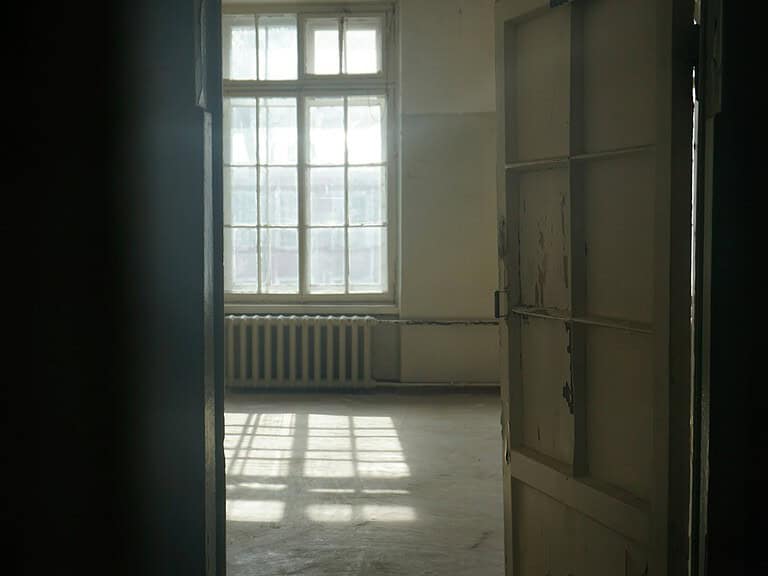
You have walked a hospital corridor at 3 a.m. You know the hum of the lights, the call bell from an empty room, the elevator that opens on a floor nobody pressed. Now imagine that corridor abandoned for 40 years. Would you walk it alone?
The hospitals and asylums on this list are famous for ghost stories, but behind every legend is a real history of tuberculosis wards, overcrowded asylums, war, and the nurses who worked inside them. Here are 13 of the most haunted hospitals in the world, what actually happened there, and the stories people still tell.
Key Takeaways
- Many “haunted” hospitals were tuberculosis sanatoriums or psychiatric asylums from the 1800s and early 1900s, when death rates were high and treatments were limited.
- Several, like Whittingham and Athens, became infamous because of real abuses and unmarked graves, not just ghost stories.
- Paranormal claims are folklore, not science. The history, though, is very real and part of nursing’s own story.
- Many sites are private property or unsafe ruins. Visit only on official tours.
The List at a Glance
| # | Hospital | Location | Operated | Known for |
|---|---|---|---|---|
| 13 | Spanish Military Hospital | St. Augustine, Florida, USA | 1700s to 1821 (museum today) | Groans from empty rooms |
| 12 | Tranquille Sanatorium | Kamloops, British Columbia, Canada | 1907 to 1983 | TB and psychiatric patients, tunnels |
| 11 | Severalls Hospital | Colchester, England | 1913 to 1997 | A huge asylum left to decay |
| 10 | Whittingham Hospital | Lancashire, England | 1873 to 1995 | Abuse scandal of the late 1960s |
| 9 | Old Changi Hospital | Singapore | 1930s to 1997 | World War II occupation |
| 8 | High Street “Ghost House” | Sai Ying Pun, Hong Kong | 1892 to 1970s | Former nurses’ quarters |
| 7 | Clark Air Base Hospital | Pampanga, Philippines | To 1991 | Abandoned U.S. military hospital |
| 6 | Nocton Hall | Lincolnshire, England | Military hospital in the 20th century | A girl seen at 4:30 a.m. |
| 5 | Aradale (Ararat Lunatic Asylum) | Victoria, Australia | 1867 to 1998 | Thousands of deaths |
| 4 | The Ridges (Athens Lunatic Asylum) | Ohio, USA | 1874 to 1993 | The stain on the floor |
| 3 | Mayday Hills (Beechworth Asylum) | Victoria, Australia | 1867 to 1995 | Night ghost tours |
| 2 | Taunton State Hospital | Massachusetts, USA | 1854 to today (much smaller) | Nurse and serial killer Jane Toppan |
| 1 | Waverly Hills Sanatorium | Louisville, Kentucky, USA | 1910 to 1961 as a TB hospital | Room 502 |
13. Spanish Military Hospital, St. Augustine, Florida

The history: St. Augustine is the oldest continuously inhabited European-founded city in the United States. During the second Spanish period, from the late 1700s to 1821, the Spanish ran a military hospital on Aviles Street. Today a reconstruction, the Spanish Military Hospital Museum, shows how soldiers were treated with herbs, bloodletting, and amputation saws.
The legends: Local ghost tours claim the site sits on or near an old burial ground, uncovered when workers repaired water lines. Visitors report groans and voices from empty rooms, beds that seem to move, and footsteps marching on the floor above.
12. Tranquille Sanatorium, British Columbia, Canada


The history: Tranquille opened near Kamloops in 1907 as a sanatorium for tuberculosis patients, on land that had been a ranch. It grew into a small self-sufficient community with gardens, a farm, staff housing, and its own fire department. After the TB era it became an institution for people with intellectual disabilities and mental illness, until it closed in the early 1980s.
The legends: Visitors describe sudden temperature drops, floating orbs, and a heavy sadness in the old wards and underground tunnels. The most repeated story is of a nurse said to have been killed by a patient, whose figure still walks the halls.
11. Severalls Hospital, Colchester, England


The history: Severalls opened in 1913 as a psychiatric hospital designed by architect Frank Whitmore, with Queen Anne style villas spread across a large estate. At its peak it housed around 2,000 patients. It wound down in the 1990s as large asylums closed across Britain, and the last patients left in 1997. Much of the site has since been redeveloped.
The legends: For years the empty wards, morgue, and long corridors drew urban explorers and ghost hunters, who reported voices and figures in the abandoned villas.
10. Whittingham Hospital, Lancashire, England

The history: Whittingham opened in 1873 as the Fourth Lancashire County Asylum and became one of the largest psychiatric hospitals in Britain. In the late 1960s, staff complaints about cruelty on some wards led to a public inquiry. It found patients had been locked in small rooms, neglected, and assaulted, and one nurse was convicted of manslaughter after the death of an elderly patient. The hospital closed in 1995.
The legends: Whittingham’s ghost stories are hard to separate from its real history. For nurses, it is a reminder of why patient advocacy, reporting, and oversight matter.
9. Old Changi Hospital, Singapore


The history: The hospital began in the 1930s as part of a British military base. During the Japanese occupation in World War II, the Changi area held prisoners of war, and stories link the hospital buildings to the military police. After the war it served as an RAF hospital and later as Changi Hospital, until services moved to the new Changi General Hospital in 1997.
The legends: Old Changi is often called the most haunted place in Singapore. Visitors talk of moans in the corridors, figures in the windows, and things that “follow them home.” The site is closed to the public, and trespassing is prohibited.
8. High Street “Ghost House,” Sai Ying Pun, Hong Kong


The history: This granite building was built in 1892 as quarters for nurses at the nearby Government Civil Hospital. During the Japanese occupation it is said to have been used for executions. After the war it became a psychiatric hospital, then sat empty from the 1970s and was damaged by fire. Its facade was preserved in the Sai Ying Pun Community Complex, which opened in 2001.
The legends: Locals called it the High Street Ghost House. Stories include a woman crying, booming sounds at night, and a figure in traditional Chinese clothing bursting into flames on the second floor.
7. Clark Air Base Hospital, Pampanga, Philippines


The history: Clark was a major U.S. military base in Pampanga from the early 1900s until 1991. Its hospital treated American service members, including many wounded and evacuated during the Vietnam War. The U.S. left after the 1991 eruption of Mount Pinatubo, and the hospital building was abandoned.
The legends: The hospital was featured by paranormal investigators on the TV series Ghost Hunters International. Residents and guards tell of voices, footsteps, and shadowy figures in the empty wards, and the building is one of the most talked-about haunted sites in the Philippines.
6. Nocton Hall, Lincolnshire, England


The history: The Nocton estate dates back centuries, and the hall itself was rebuilt in the 1840s. In the 20th century it served as a military hospital, first for the Royal Air Force and later as a U.S. Air Force hospital. After it closed it was left empty and was badly damaged by fire in 2004.
The legends: The best-known legend is of a young woman murdered in the house generations ago, whose figure is said to appear in one room at exactly 4:30 a.m.
5. Aradale (Ararat Lunatic Asylum), Victoria, Australia


The history: Ararat’s asylum opened in 1867 and became one of the largest in Australia. It also held a ward for the criminally insane. Tours often claim that around 13,000 people died there over its 130 years. It closed in 1998, and part of the site was later used as a training campus.
The legends: Aradale runs ghost tours, and visitors report footsteps, trolleys moving on their own, and the feeling of being watched in the old wards.
4. The Ridges (Athens Lunatic Asylum), Ohio, USA


The history: The Athens Lunatic Asylum opened in 1874 and later went through many name changes before closing in 1993. Patients underwent treatments of the era, including lobotomies, and nearly 2,000 former patients are buried in cemeteries on the grounds, many under headstones marked only with numbers. Most of the property now belongs to Ohio University.
The legends: In 1978 a patient named Margaret Schilling went missing. Her body was found weeks later in a closed ward, and the outline she left on the floor remained visible for decades, the most famous story at The Ridges.
3. Mayday Hills (Beechworth Lunatic Asylum), Victoria, Australia


The history: Beechworth’s asylum, later called Mayday Hills Hospital, opened in 1867, the same year as Ararat, to relieve overcrowding in Victoria’s asylums. It operated for 128 years until 1995. The grounds now host a hotel, events, and ghost tours.
The legends: Tour guides tell of a woman who fell from a high window, a matron who still walks the corridors, and cold spots in the old wards.
2. Taunton State Hospital, Massachusetts, USA


The history: Taunton opened in 1854 as the State Lunatic Hospital at Taunton. Its most notorious patient was Jane Toppan, a nurse who confessed in 1901 to killing at least 31 people, many of them patients, and who spent the rest of her life there. Most of the old Kirkbride building was demolished in the 2000s, though a much smaller state hospital still runs on the campus.
The legends: Rumors of rituals in the basement and a “shadowy figure” crawling on the walls have circulated for decades. There is no evidence for them, but they keep Taunton on haunted lists.
1. Waverly Hills Sanatorium, Kentucky, USA


The history: Waverly Hills opened in 1910 as a small tuberculosis hospital for about 40 to 50 patients. As the TB epidemic grew, a large five-story building opened in 1926. Before antibiotics, treatment meant fresh air, rest, and surgery, and death was common. Estimates of deaths vary widely, and the high numbers told on tours are disputed. The sanatorium closed in 1961, and the building is now known for paranormal tours.
The legends: The most famous legend involves Room 502, where a head nurse is said to have taken her own life in 1928, and where another nurse supposedly fell from the window a few years later. There are no records confirming either story. Visitors also tell of a boy called Timmy who rolls a ball down the hall, and of the “body chute,” a tunnel used to move bodies out of sight of living patients.
Why So Many Haunted Hospitals Were Sanatoriums and Asylums
Before antibiotics and modern psychiatric drugs, people with tuberculosis or severe mental illness were sent away to large institutions, often for years. Many died there, far from family. Overcrowding, isolation, and treatments that are hard to imagine today left deep marks on these buildings, and on the communities around them. When the institutions closed, the empty buildings became natural settings for ghost stories.
For nurses, these places are also part of our history. Nurses worked long shifts in TB wards with little protection and cared for patients that society had shut away. Read more in our look at nursing during the 1918 influenza pandemic.


 {% endif %}
Leave a Comment