
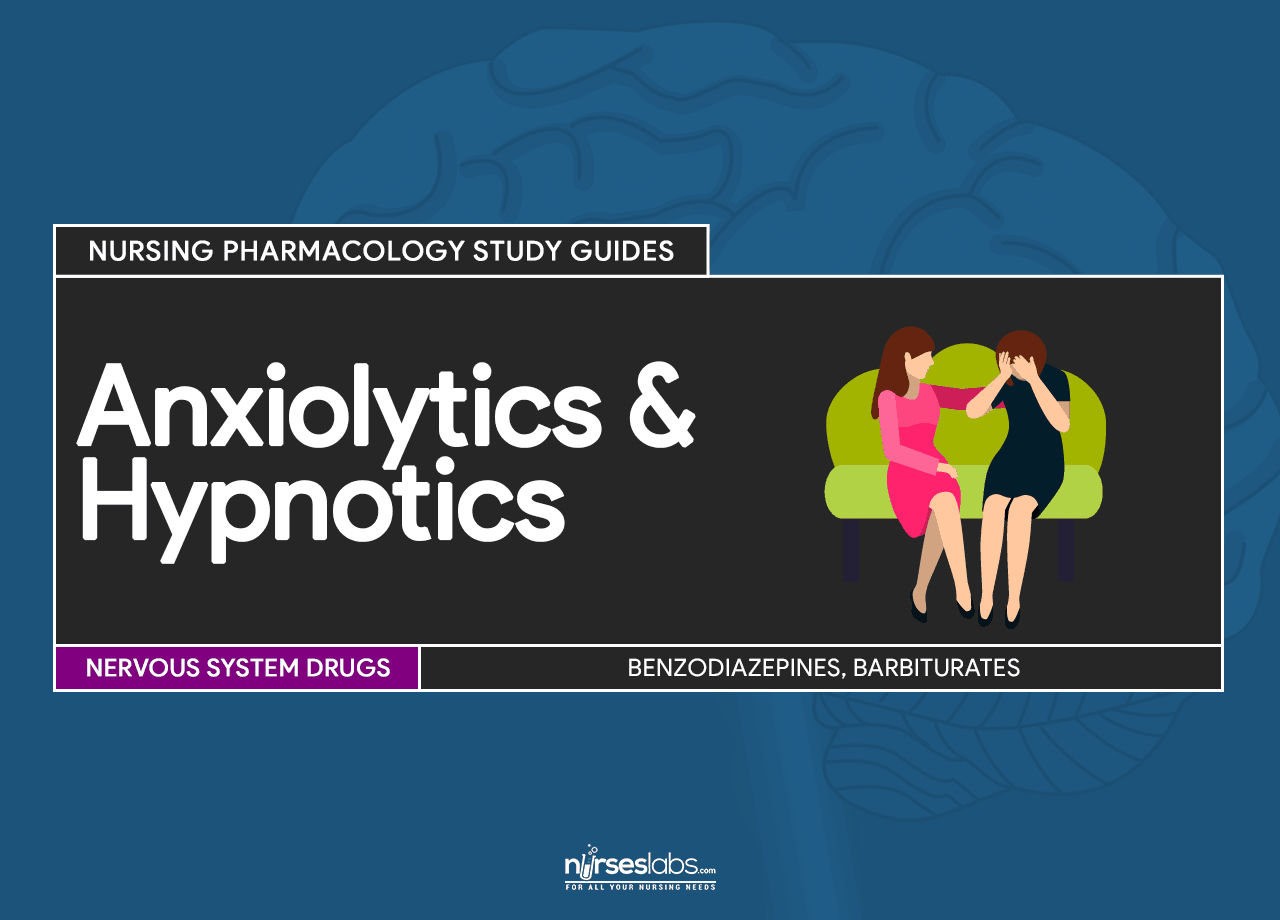
Anxiolytic-hypnotic agents are used to alter an individual’s responses to environmental stimuli. These agents are referred to as anxiolytics (which prevent feelings of tension or fear), sedatives (which help patients feel calm and unaware of their environment), and hypnotics (which help patients sleep).
Brand Names and Generic Names
Here is a table of commonly encountered diuretic agents, their generic names, and brand names:
- Benzodiazepine (as Anxiolytic-Hypnotics)
- alprazolam (Xanax)
- chlordiazepoxide (Librium)
- clonazepam (Klonopin)
- diazepam (Valium)
- lorazepam (Ativan)
- oxazepam (Serax)
- triazolam (Halcion)
- Barbiturates (as Anxiolytic-Hypnotics)
- amobarbital (Amytal sodium)
- butabarbital (Butisol)
- pentobarbital (Nembutal)
- phenobarbital (Luminal)
- Other Anxiolytic-Hypnotic Drugs
- buspirone
- diphenhydramine (Benadryl)
- meprobamate (Miltown)
- promethazine (Phenergan)
- zolpidem (Ambien)
Manifestation Spotlight: Anxiety, Sedation, and Hypnosis
Anxiety is described as a feeling of tension, nervousness, and apprehension which typically involves unpleasant reactions to a stimulus both real and imaginary. It is accompanied by sympathetic nervous system reactions like fast heartbeat, rapid breathing, flushing, and sweating. Anxiety can be mild, moderate, or severe.
Sedation is the loss of awareness and reaction to environmental stimuli. However, this may be desirable for restless and irritable patients. This is also beneficial for patients who are about to undergo surgery.
Hypnosis is the further depression and sleep of the central nervous system (CNS) which usually results from extreme sedation. In this state, the person no longer senses or reacts to incoming stimuli.
Benzodiazepines Used as Anxiolytic-Hypnotics
- This is the most frequently used anxiolytic drug because it can lyse or break the feeling of anxiety without causing much sedation and is less likely to make patients physically dependent.
Therapeutic Action
- By acting on the limbic system and the reticular activating system (RAS), it causes the gamma-aminobutyric acid (GABA) to be more effective in interfering with neuron firing. GABA stabilizes the postsynaptic cell which leads to an anxiolytic effect at a dose lower than required to induce sedation and hypnosis. However, the exact mechanism of action is not clearly understood.
Indications
- Indicated for the treatment of the following conditions: anxiety disorders, alcohol withdrawal, hyperexcitability and agitation, and preoperative relief of anxiety and tension to aid in balanced anesthesia.
Children
- Response of children to these agents is unpredictable so indication of this drug to the younger population remains to be a challenge.
- Children may be inappropriately aggressive, tearful, and irritable.
- Only clonazepam, clorazepate, and diazepam have established pediatric dosages. Possible dried secretions and their effect on breathing must always be assessed carefully.
Adults
- If the drug is indicated for insomnia, they should be cautioned that the drug is for short-term use only. Other methods to help induce sleep such as strict implementation of a set bedtime, warm bath, and a back rub must be encouraged before prescribing this drug.
- It should be advised that activities such as driving, sports, and making legal decisions should be avoided when taking this drug.
- Liver function should be evaluated before and during therapy.
- Use of this drug in pregnant and lactating women is contraindicated.
Older adults
- Older adults are more susceptible to drug adverse effects like hallucinations and sedation.
- Dosage should be reduced and careful monitoring for toxicity is instituted.
- Like adults, liver and renal function should be monitored closely.
- Non-drug measures to reduce anxiety should be encouraged.
Pharmacokinetics
| Route | Onset | Peak | Duration |
|---|---|---|---|
| Oral | 30-60 min | 1-2 h | 3 h |
| IM | 15-30 min | 30-45 min | 3 h |
| IV | 1-5 min | 30 min | 15-60 min |
| Rectal | Rapid | 1.5 h | 3 h |
Contraindications and Cautions
- Allergy to benzodiazepines. Prevent severe hypersensitivity reactions.
- Psychosis. Can be exacerbated by sedation
- Acute narrow-angle glaucoma, shock, coma, acute alcoholic intoxication. Can be exacerbated by the depressant effects of these drugs.
- Pregnancy. Associated with development of cleft lip or palate, inguinal hernia, cardiac defects, microcephaly, and pyloric stenosis when taken in the first trimester of pregnancy. Neonatal withdrawal syndrome may also result.
- Lactation. Potential adverse effects to the neonate (e.g. sedation)
- Elderly, debilitated. Possibiliy of unpredictable reactions
- Renal or hepatic dysfunction. May alter metabolism and excretion of drugs resulting in direct toxicity.
Adverse Effects
- CNS: sedation, drowsiness, depression, lethargy, blurred vision, headache, apathy, light-headedness, amnesia, confusion, mild paradoxical excitatory reactions in the first two weeks of therapy
- CV: hypotension, hypertension, arrhythmias, palpitations
- GI: dry mouth, constipation, nausea, vomiting, elevated liver enzymes
- GU: urinary retention and hesitancy, loss of libido, changes in sexual functioning
- Hematological: blood dyscrasias, anemia
- Local injection sites can develop phlebitis, local reactions, and thrombosis.
- Withdrawal syndrome caused by abrupt cessation of drugs is characterized by nausea, headache, vertigo, malaise, and nightmares.
Interactions
- Alcohol, other CNS depressants: increased risk of CNS depression
- Cimetidine, oral contraceptives, disulfiram: increased effects of benzodiazepines
- Theophylline, ranitidine: decreased therapeutic effects of benzodiazepines
- Flumazenil is the antidote of benzodiazepine.
Nursing Considerations
Here are important nursing considerations when administering this drug:
Nursing Assessment
These are the important things the nurse should include in conducting assessment, history taking, and examination:
- Assess for the mentioned cautions and contraindications (e.g. drug allergies, hepatorenal diseases, psychosis, glaucoma, etc.) to prevent any untoward complications.
- Perform a thorough physical assessment to establish baseline data before drug therapy begins, to determine effectiveness of therapy, and to evaluate for occurrence of any adverse effects associated with drug therapy.
- Monitor results of laboratory tests (e.g. renal and liver functions tests, complete blood count (CBC), etc.) to monitor effectiveness of the therapy and provide prompt treatment to developing complications.
Nursing Diagnoses
Here are some of the nursing diagnoses that can be formulated in the use of this drug for therapy:
- Disturbed thought processes and sensory perception related to CNS effects
- Disturbed sleep pattern related to CNS effects
- Risk for injury related to CNS effects
Implementation with Rationale
These are vital nursing interventions done in patients who are taking anxiolytic-hypnotics:
- Administer intravenous diuretics slowly to prevent severe changes in fluid and electrolytes.
- Do not mix intravenous drugs in solution with any other drugs to avoid potential drug-drug interactions.
- Maintain patients who receive parenteral benzodiazepines in bed for at least 3 hours to ensure patient safety.
- Monitor patient response to drugs through vital signs, weight, serum electrolytes and hydration to evaluate effectiveness of drug therapy.
- Monitor hepatic and renal function and CBC for long-term therapies to detect dysfunction and to arrange to taper and discontinue drug if dysfunction occurs.
- Provide safety measures (e.g. adequate lighting, raised side rails, etc.) to prevent injuries.
- Educate client on drug therapy to promote compliance.
Evaluation
Here are aspects of care that should be evaluated to determine effectiveness of drug therapy:
- Monitor patient response to therapy (e.g. controlled anxiety, sleep, etc).
- Monitor for adverse effects (e.g. hypotension, blood dyscrasias, hepatorenal dysfunction, etc).
- Evaluate patient understanding on drug therapy by asking patient to name the drug, its indication, and adverse effects to watch for.
- Monitor patient compliance to drug therapy.
Barbiturates Used as Anxiolytic-Hypnotics
- These were once the sedative-hypnotic drugs of choice but newer anxiolytics have replaced them. Barbiturates have high risk for addiction and dependency.
Therapeutic Action
- These are general CNS depressants that inhibit neuronal impulse conduction in the ascending RAS, depress the cerebral cortex, alter cerebellar function, and depress motor output. Therefore, they can cause sedation, hypnosis, anesthesia, and even coma.
Indications
- Generally indicated for anxiety, sedation, insomnia, paresthesia, and seizures.
- Parenteral forms may be used for treatment of acute manic reactions.
Children
- Barbiturates have established pediatric dosage but must be used with caution because children often have unexpected responses.
- Children may be inappropriately aggressive, tearful, and irritable.
- Possible dried secretions and their effect on breathing must always be assessed carefully.
Adults
- If drug is indicated for insomnia, they should be cautioned that drug is for short-term use only.
- Other methods to help induce sleep such as strict implementation of set bedtime, warm bath, and a back rub must be encouraged before prescribing this drug.
- It should be advised that activities such as driving, sports, and making legal decisions should be avoided when taking this drug.
- Liver function should be evaluated before and during therapy.
- Use of this drug in pregnant and lactating women is contraindicated.
Older adults
- Older adults are more susceptible to drug adverse effects like hallucinations and sedation.
- Dosage should be reduced and careful monitoring for toxicity is instituted.
- Like adults, liver and renal function should be monitored closely.
- Non-drug measures to reduce anxiety should be encouraged.
Pharmacokinetics
| Route | Onset | Peak | Duration |
|---|---|---|---|
| Oral | 15 min | 30-60 min | 10-16 h |
| IM, subcutaneous | – | 10-30 min | 4-6 h |
| IV | Up 10 15 min | 5 min | 4-6 h |
Contraindications and Cautions
- Allergy to barbiturates. Prevent severe hypersensitivity reactions.
- History of addiction to sedative-hypnotic drugs: barbiturates are more addicting than most other anxiolytics
- Latent or manifest euphoria. May be exacerbated by drug effects
- Marked hepatic impairment or nephritis. May alter the metabolism and excretion of drugs
- Respiratory distress and dysfunction. Exacerbated by CNS depression caused by drugs.
- Pregnancy. Associated with congenital abnormalities
- Lactation. Has potential for adverse effects on the infant.
- Acute or chronic pain. Can cause paradoxical excitement which can mask other symptoms
- Seizure disorder. Abrupt withdrawal of barbiturates can precipitate status epilepticus
- Chronic hepatic, cardiac, and respiratory diseases. Can be exacerbated by the depressive effects of these drugs.
Adverse Effects
- CNS: drowsiness, somnolence, lethargy, ataxia, vertigo, “hangover” feeling, thinking abnormalities, paradoxical excitement, anxiety, hallucinations
- CV: bradycardia, hypotension, syncope
- Respiratory: serious hypoventilation, respiratory depression
- Hypersensitivity reactions: rash, serum sickness, Steven-Johnson syndrome
- Development of physical tolerance and psychological dependence
Interactions
- Alcohol, other CNS depressants (e.g. antihistamines, tranquilizers, etc.): increased risk of CNS depression
- Phenytoin: altered response to phenytoin
- Monoamine oxidase (MAO) inhibitors: increased serum levels of barbiturates
- Oral anticoagulants, digoxin, corticosteroids, tricyclic antidepressants (TCAs), oral contraceptives, acetaminophen, metronidazole, carbamazepine: reduced effectivity of these drugs because of enzyme induction effect of barbiturates
Nursing Considerations
Here are important nursing considerations when administering this drug:
Nursing Assessment
These are the important things the nurse should include in conducting assessment, history taking, and examination:
- Assess for the mentioned cautions and contraindications (e.g. drug allergies, hepatorenal diseases, seizure disorders, etc.) to prevent any untoward complications.
- Perform a thorough physical assessment to establish baseline data before drug therapy begins, to determine effectiveness of therapy, and to evaluate for occurrence of any adverse effects associated with drug therapy.
Nursing Diagnoses
Here are some of the nursing diagnoses that can be formulated in the use of this drug for therapy:
- Impaired gas exchange related to respiratory depression
- Disturbed thought processes and sensory perception related to CNS effects
- Risk for injury related to CNS effects
Implementation with Rationale
These are vital nursing interventions done in patients who are taking anxiolytic-hypnotics:
- Administer intravenous diuretics slowly because rapid administration may cause cardiac problems.
- Do not mix intravenous drugs in solution with any other drugs to avoid potential drug-drug interactions.
- Taper dose as ordered because abrupt withdrawal can precipitate seizure attacks.
- Provide comfort measures (e.g. small, frequent meals, access to bathroom facilities, orientation, etc.) to help patient tolerate drug effects
- Provide safety measures (e.g. adequate lighting, raised side rails, etc.) to prevent injuries.
- Educate client on drug therapy to promote compliance.
Evaluation
Here are aspects of care that should be evaluated to determine effectiveness of drug therapy:
- Monitor patient response to therapy (e.g. controlled anxiety, sleep, etc).
- Monitor for adverse effects (e.g. hypotension, dependence, hepatorenal dysfunction, etc).
- Evaluate patient understanding on drug therapy by asking patient to name the drug, its indication, and adverse effects to watch for.
- Monitor patient compliance to drug therapy.
Recommended Resources
Our recommended nursing pharmacology resources and books:
Disclosure: Included below are affiliate links from Amazon at no additional cost from you. We may earn a small commission from your purchase which will help support us. Thank you! For more information, check out our privacy policy.
Pharm Phlash! Pharmacology Flash Cards #1 BEST SELLER!
Test-yourself review cards put critical clinical information for nearly 400 of the top generic medications at your fingertips. And, you can count on them for accuracy, because each card is based on content from Davis’s Drug Guide for Nurses. Increase your test scores in pharmacology class.
Focus on Pharmacology (8th Edition)
Focus on Nursing Pharmacology makes challenging concepts more approachable. Engaging learning features cultivate your clinical application, critical thinking and patient education capabilities. This updated 8th edition builds on your knowledge of physiology, chemistry and nursing fundamentals to help you conceptualize need-to-know information about each group of drugs.
Pharmacology Made Incredibly Easy (Incredibly Easy! Series®)
Nursing pharmacology guide offers step-by-step guidance so you can grasp the fundamentals in enjoyable Incredibly Easy style. This is the perfect supplement to class materials, offering solid preparation for NCLEX® as well as a handy refresher for experienced nurses. Colorfully illustrated chapters offer clear, concise descriptions of crucial nursing pharmacology concepts and procedures.

Lehne’s Pharmacology for Nursing Care (11th Edition)
The Eleventh Edition of Lehne’s Pharmacology for Nursing Care provides a thorough understanding of key drugs and their implications for nursing care. This text, written by renowned nursing educators, helps you comprehend and apply pharmacology principles. A clear and engaging writing style simplifies complex concepts, making even the most challenging pharmacology content enjoyable. We recommend this book if you want a comprehensive nursing pharmacology guide.
Nursing Drug Handbook
Nursing2023 Drug Handbook delivers evidence-based, nursing-focused drug monographs for nearly 3700 generic, brand-name, and combination drugs. With a tabbed, alphabetical organization and a “New Drugs” section, NDH2023 makes it easy to check drug facts on the spot.
Pharmacology and the Nursing Process
The 10th edition of Pharmacology and the Nursing Process offers practical, user-friendly pharmacology information. The photo atlas contains over 100 unique illustrations and photographs depicting drug administration techniques. Updated drug content reflects the most recent FDA drug approvals, withdrawals, and therapeutic uses.
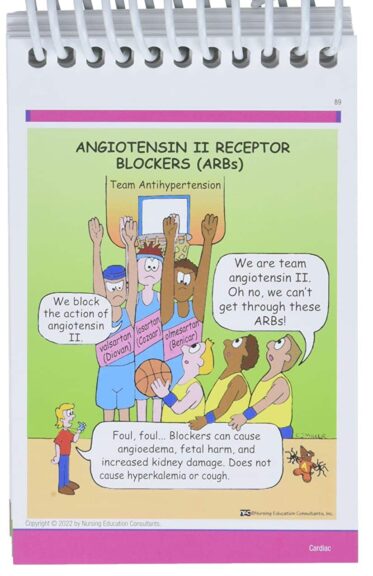
Mosby’s Pharmacology Memory NoteCards: Visual, Mnemonic, and Memory Aids for Nurses
The 6th edition of Mosby’s Pharmacology Memory NoteCards: Visual, Mnemonic, & Memory Aids for Nurses incorporates illustrations and humor to make studying easier and more enjoyable. This unique pharmacology review can be utilized as a spiral-bound notebook or as individual flashcards, making it ideal for mobile study.
See Also
Here are other nursing pharmacology study guides:
- Nursing Pharmacology – Study Guide for Nurses
Our collection of topics related to nursing pharmacology - Pharmacology Nursing Mnemonics & Tips
These nursing mnemonics aim to simplify the concepts of pharmacology through the use of a simple, concise guide. - Generic Drug Name Stems Cheat Sheet
Learn about these generic drug name stems to help you make sense of drugs easier! - Common Drugs and Their Antidotes
A guide to drug antidotes that nurses should be familiar about. - IV Fluids and Solutions Guide & Cheat Sheet
Get to know the different types of intravenous solutions or IV fluids in this guide and cheat sheet. - Drug Dosage Calculations NCLEX Practice Questions (100+ Items)
Care to take the challenge? This quiz aims to help students and registered nurses alike grasp and master the concepts of medication calculation.
We have a pill for that…

Drug Guides NEW!
Individual drug guides and nursing considerations for the most common medications used in nursing pharmacology:
- Acetaminophen (Tylenol)
- Aspirin
- Atorvastatin (Lipitor)
- Enoxaparin (Lovenox)
- Furosemide (Lasix)
- Gabapentin
- Hydromorphone (Dilaudid)
- Lisinopril
- Metoprolol
- Morphine
Gastrointestinal System Drugs
Respiratory System Drugs
- Antihistamines
- Bronchodilators and Antiasthmatics
- Decongestants
- Expectorants and Mucolytics
- Inhaled Steroids
- Lung Surfactants
Endocrine System Drugs
- Adrenocortical Agents
- Antidiabetic Agents
- Glucose-Elevating Agents
- Hypothalamic Agents
- Insulin
- Parathyroid Agents: Bisphosphonates, Calcitonins
- Pituitary Drugs
- Sulfonylureas
- Thyroid Agents
Autonomic Nervous System Drugs
- Adrenergic Agonists (Sympathomimetics)
- Adrenergic Antagonists (Sympatholytics)
- Anticholinergics (Parasympatholytics)
- Cholinergic Agonists (Parasympathomimetics)
Immune System Drugs
Chemotherapeutic Agents
- Anthelmintics
- Anti-Infective Drugs
- Antibiotics
- Antifungals
- Antineoplastic Agents
- Antiprotozoal Drugs
- Antiviral Drugs
Reproductive System Drugs
Nervous System Drugs
- Antidepressants
- Antiparkinsonism Drugs
- Antiseizure Drugs
- Anxiolytics and Hypnotic Drugs
- General and Local Anesthetics
- Muscle Relaxants
- Narcotics, Narcotic Agonists, and Antimigraine Agents
- Neuromuscular Junction Blocking Agents
- Psychotherapeutic Drugs
Cardiovascular System Drugs
References and Sources
References and sources for this pharmacology guide for Anxiolytics and Hypnotic Drugs:
- Karch, A. M., & Karch. (2011). Focus on nursing pharmacology. Wolters Kluwer Health/Lippincott Williams & Wilkins. [Link]
- Katzung, B. G. (2017). Basic and clinical pharmacology. McGraw-Hill Education.
- Lehne, R. A., Moore, L. A., Crosby, L. J., & Hamilton, D. B. (2004). Pharmacology for nursing care.
- Smeltzer, S. C., & Bare, B. G. (1992). Brunner & Suddarth’s textbook of medical-surgical nursing. Philadelphia: JB Lippincott.


![Furosemide Nursing Considerations and Patient Teaching [Drug Guide]](https://nurseslabs.com/wp-content/uploads/2023/07/Furosemide-160x120.jpg)

![Lisinopril Nursing Considerations and Patient Teaching [Drug Guide]](https://nurseslabs.com/wp-content/uploads/2023/03/Lisinopril-160x120.jpg)






![Furosemide Nursing Considerations and Patient Teaching [Drug Guide]](https://nurseslabs.com/wp-content/uploads/2023/07/Furosemide-768x576.jpg)
Leave a Comment